The Bastard Son & The Devil Himself: Horny Witch Fight Club With Feelings (Affectionate)

Netflix took a grimdark YA fantasy, added pop-song menace, gorgeous lighting, and enough emotional damage to power the UK for a decade.
The Source Material: The Half Bad Trilogy, a.k.a. “YA Fantasy But Make It Bleak, Sharp, and Slightly Unwell”
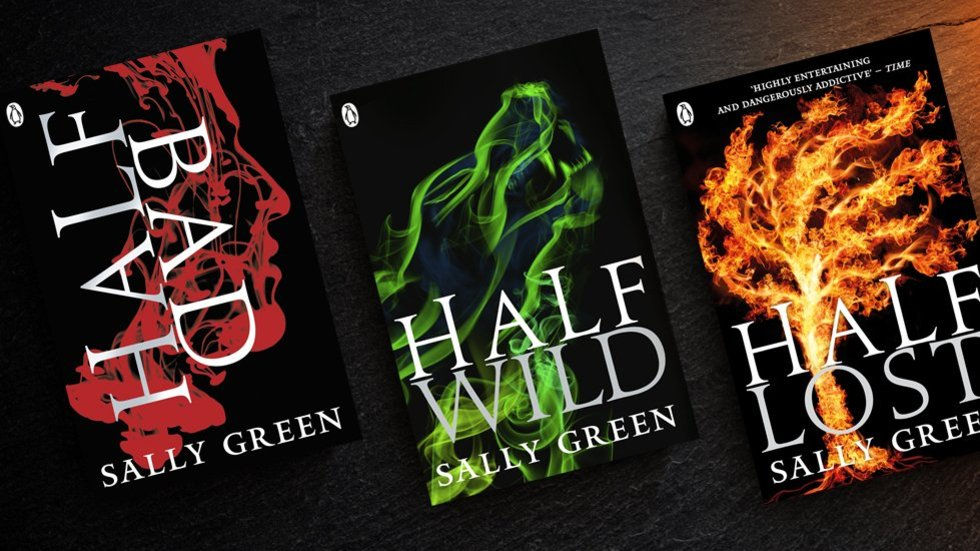
Before Netflix gave us The Bastard Son & The Devil Himself—aka “Everyone Is Hot, Everyone Is Injured”—this story lived on the page as Sally Green’s Half Bad trilogy: Half Bad, Half Wild, and Half Lost. And if you’ve only met this world through the series, it’s worth knowing the books aren’t just “witches + chosen one + violence.” They’re weirdly intimate for something so brutal—like a diary written by someone sprinting through a forest while being chased by the concept of inherited trauma.
What the books are really like (tone and texture)
The trilogy is grim, but not in a “look how edgy I am” way—more in a “the system is cruel and it will keep being cruel” way. It’s YA, sure, but it doesn’t do the comforting genre thing where adults are dumb and teens fix everything through friendship speeches. In Half Bad, the danger feels constant and practical: rules are enforced, bodies break, institutions grind people down, and “good guys” do monstrous things while insisting they’re protecting society.
Also: the books have a distinct voice. Nathan’s perspective feels close, raw, and sometimes oddly detached—like he’s narrating his own disaster with the numb calm of someone who has been disappointed too many times to be surprised. It’s not quippy; it’s not melodramatic. It’s often just… matter-of-fact suffering, which somehow makes it hit harder.
The world-building isn’t sparkly—it's political

The core setup is simple on paper: Fairborn witches (society-approved) vs Blood witches (society-demonized). But in the books, that divide isn’t just lore—it’s a social system. It’s class, propaganda, policing, surveillance, and the way “respectable” communities will justify violence if they can label someone as dangerous enough.
If you’re looking for Hogwarts vibes, the trilogy says, “No ❤️” and throws you into something closer to a parallel Britain with witch authoritarianism—where reputation is destiny, lineage is treated like a crime, and “justice” is whatever the people in power say it is that week.
Nathan on the page: less “chosen one,” more “trauma sponge with teeth”
Book-Nathan isn’t a glossy fantasy hero. He’s a kid who’s been shaped by deprivation, fear, and constant control. He makes mistakes. He runs. He lashes out. He tries to be kind and then learns kindness can get you killed. The books are really committed to showing how someone becomes resilient without romanticizing it—like, “Here’s what survival looks like when it’s ugly and exhausting and you don’t get a medal.”
That’s important because Half Bad isn’t secretly about epic magical destiny as much as it’s about:
what happens when adults decide you’re a problem before you do anything wrong
what you become when your options are always “obey” or “be punished”
whether identity is inherited or chosen
how love and loyalty can save you and ruin you
Structure and pacing: why adapting it is tricky
The trilogy has a slow-burn tension that works beautifully in prose but is a nightmare in TV pacing. A lot of the dread comes from internal state: Nathan’s fear, his constant assessment of risk, the sense that any safety is temporary. On screen, you can’t just “think in italics” for 200 pages. You need motion. Events. Visual escalation.
So when Netflix adapts it, one of the big challenges is turning a lot of that simmering psychological pressure into external momentum—which partly explains why the show sometimes feels like it’s sprinting through information. The books can afford to sit in the unease. The series often needs to move.
Violence and morality: the books go colder

The show is violent, but the books can feel even more clinical about it—less stylized, more “this is what damage does.” They also lean harder into the uncomfortable truth that “good” factions commit atrocities with clean hands and clean language. The Fairborns aren’t just antagonists; they’re an entire moral framework that has decided cruelty is acceptable if it’s bureaucratized.
One of the trilogy’s strengths is how it refuses to hand you easy alignment charts. It keeps asking:
If you’re raised in a violent system, do you have the tools to be gentle?
Is morality still morality if it only applies to “your kind”?
How many times can someone be hunted before they stop believing in innocence?
Relationships: less “shipping,” more “this might be the only warmth you get”
Romance and friendship in the books often carry a survival weight. Connections feel like oxygen—not cute extras. People aren’t just love interests; they’re lifelines, risks, mirrors, sometimes weapons. And because the world is so punitive, intimacy itself can feel rebellious. The show captures a lot of that emotional intensity, but on the page it tends to land with a quieter desperation.
So what does Netflix pull from the trilogy?
The adaptation pulls the core DNA:
Nathan as the boy caught between categories people use to justify cruelty
the Fairborn/Blood hierarchy and its hypocrisy
the sense that power is always asking “what are you willing to do to survive?”
But the books provide extra depth in the why behind characters’ hardness, the slow accumulation of mistrust, and the way ideology becomes personal violence. That’s why fans of the trilogy often talk about the feeling of the books—because they don’t just tell a story, they marinate you in the consequences.
In other words: if the series is a stylish punch to the face, the books are a long walk through the cold where you keep realizing the rules were never meant to protect you.
Production: “We’re Making YA Fantasy, But Everyone Looks Like They Haven’t Slept Since the Industrial Revolution”

One of the sneakiest flexes of The Bastard Son & The Devil Himself is that it doesn’t feel like typical streaming YA. It feels like somebody in the production office said, “What if we made this look like a prestige drama that accidentally wandered into a knife fight?” And then everyone nodded solemnly and purchased 40 gallons of rain.
This isn’t a show where magic is a soft glow and a wind machine. It’s concrete, rust, candlelight, bruises, and moral rot—and you can tell a lot of departments were working overtime to make sure the world feels lived-in, uncomfortable, and slightly unsafe at all times.
The “Not Glossy” Aesthetic Choice (and why it matters)

A lot of supernatural teen shows default to pretty. This one defaults to raw. The locations and sets don’t feel like “we built a cool witch set.” They feel like real places that happen to contain secrets, power struggles, and the occasional person about to be chased through a hallway.
That choice does two important things:
It makes the fantasy feel grounded, like it’s happening next door rather than in some shiny alternate dimension.
It keeps the violence and stakes from feeling like cosplay. When people get hurt, it feels like it costs them something.
Locations & Setting: Britain, But Make It Haunted By Bureaucracy
The show leans hard into a very specific flavor of modern Britain: bleak skies, wet streets, institutional buildings that look like they were designed to punish joy, and countryside that’s gorgeous in an ominous “you could die here” way.
It’s a smart match for the story because the whole premise is about institutions—rules, lineages, policing who counts as “safe.” And what better visual shorthand for oppressive institutions than buildings that look like they’ve never once hosted a happy thought?
Costumes & Design: Practical, Stylish, and Mildly Threatening

The wardrobe isn’t “high fantasy robes.” It’s more like: what would witches wear if they wanted to blend in, intimidate you, and still be able to sprint? There’s a nice balance of modern streetwear with the occasional “this person is definitely in a secret organization” silhouette.
Also, a quiet win: the characters don’t look like they’re dressed for a photoshoot. They look like they’ve been living in their clothes—creases, layers, texture. It helps sell the world as physical and real.
Makeup, Blood, and Practical Grossness
This show loves bodily consequence. Injuries look painful. Blood looks messy. The magic-related violence has weight because you can see it on people.
And the gore isn’t just “shock value.” It’s part of the show’s identity: magic is not clean, power is not free, and being young in this world is basically a full-time job with terrible benefits.
There’s also something borderline funny (complimentary) about how often characters are covered in blood and dirt like it’s the official uniform. Nobody is moisturized. Nobody is thriving. Everyone is damp.
Stunts & Action: Scrappy, Brutal, and Close-Up
The fight choreography feels intentionally unpretty. It’s not elegant spell-duels with perfect lighting. It’s frantic, physical, and frequently looks like it hurts.
A lot of scenes are shot in a way that keeps you close to the bodies—less “look at this cool action sequence,” more “you are in this panic with them.” That’s a production decision as much as a writing one, and it’s why the show’s violence hits harder than it might on paper.
Editing & Episode Rhythm: Binge Fuel With a Few Wobbles
The show clearly understands streaming momentum: it builds mini-cliffhangers, emotional punches, and “oh no” reveals designed to carry you into the next episode like a cursed conveyor belt.
But that same urgency can make things feel compressed. Sometimes emotional beats barely get a breath before the plot yanks the camera somewhere else. You can feel the adaptation pressure: a lot of story to cover, a lot of character work to maintain, and only so much time before the next disaster arrives.
Think of it like: the editing is doing cardio. Occasionally it trips on the treadmill, but it keeps running.
VFX & Magic Presentation: Subtle, Physical, and Mostly Smart

This series generally avoids the trap of “CGI sparkle cloud.” The magic feels textural—rituals, pain, bodies, practical mess. That’s a production win because it makes supernatural moments feel like extensions of the world rather than an effects reel.
When effects show up, they usually support the tone rather than hijack it. The show knows its magic is scarier when it’s restrained, when it feels possible in the worst way.
Overall: A Show That Looks Like It Has Taste (and Trauma)
What I like most about the production is that it has a clear point of view. It’s not just “make it dark because dark equals serious.” It’s dark because the story is about systems that crush people, and the visuals reinforce that claustrophobia.
The result is a series that feels more distinctive than its premise alone might suggest: gritty without being drab, stylish without being glossy, and committed to making the fantasy feel like it has weight, dirt, and consequences.
In short: it’s YA, but it’s YA with a cigarette behind its ear and a cracked knuckle—and the production is a big reason why.
Story: A Supernatural Coming-of-Age Tale That Refuses to Be Cute (Non-Spoiler Deep Dive)

If you go into The Bastard Son & The Devil Himself expecting a standard “special boy discovers he’s special” arc where the universe politely hands him clues, mentors, and a color-coded enemy… the show will laugh gently, shove you into a ditch, and keep driving.
The story is basically built around one question: what happens to a teenager when everyone else has already decided he’s dangerous? Not because of something he did—because of who he is, who he’s related to, and what the world assumes that means. From there, the show turns that premise into a constant pressure-cooker of pursuit, power, and identity.
The Core Engine: Nathan vs. a System That’s Already Convicted Him
At the center is Nathan: a kid growing up in modern Britain where witches exist under a rigid social order. That order isn’t just “two factions that don’t get along.” It’s a whole structure—rules, authorities, enforcement, social stigma—that decides who is acceptable and who is disposable.
Nathan’s problem is that he is impossible for this world to categorize safely. He’s both a person and a symbol, and the symbol part is what everyone reacts to. The early story keeps pushing him into situations where he has to navigate:
people who want to control him “for his own good”
people who fear him as a future threat
people who see him as a tool, a weapon, or a bargaining chip…and sometimes all three at once, depending on the day.
It’s a great setup because it instantly makes everything feel precarious. Even “help” has teeth.
Plot Shape: More Thriller Than Fantasy Comfort Food

A lot of fantasy TV settles into a cozy pattern: training montage → quest → boss fight → season finale. This show leans more like a chase thriller wrapped in dark fantasy. The plot is constantly moving, not because it wants to overwhelm you, but because Nathan rarely gets to stop and process anything before the next crisis hits.
That creates a specific feeling: the story doesn’t unfold at Nathan’s pace; it happens to him—until, gradually, he starts choosing things instead of just surviving them. That shift is one of the most satisfying parts of the series, even when the steps toward it are messy and painful.
And “messy and painful” is basically the show’s brand identity.
What the Series Is Actually About (Under the Witch Stuff)
On the surface, it’s about witches, factions, and a looming threat. Underneath, the story is doing a bunch of very human things:
Identity vs. inheritance: Is Nathan destined to become what people fear, or can he define himself?
The violence of “protection”: The show is big on how control can be framed as care, and how institutions justify cruelty as “necessary.”
Found family as survival: Relationships aren’t just romance or friendship beats—they’re lifelines, and the story treats them like oxygen.
Power as cost: Power isn’t just “cool abilities.” It changes you, it hurts, it asks something from you.
The show’s plot keeps circling these ideas through action, betrayal, and the constant question of who Nathan can trust—which is not many people, because this is one of those worlds where trust is a luxury item.
Pacing: Addictive, Sometimes Breathless
Non-spoiler truth: the series can feel like it’s speed-running certain developments. It’s not that the story doesn’t make sense—it’s that it sometimes moves so fast you can feel the adaptation gears turning. You might occasionally wish for an extra scene to let an emotional beat settle, or for the lore to be explained with less “here, catch this while we’re sprinting.”
But that breathlessness is also part of why it’s bingeable. The story is structured with a lot of forward momentum:
scenes end on new threats, emotional jolts, or uneasy reveals
the stakes escalate in steps rather than one giant dump
every episode tends to shift the situation, so it rarely feels like wheel-spinning
It’s messy in a way that still pulls you forward, which is an underrated storytelling skill.
Tension & Stakes: Danger With Personal Consequences

The show is good at keeping the danger specific. It’s not just “the world might end.” It’s “this person might betray you,” “this authority might decide you’re a problem,” “you might lose the one place you can hide,” “your own body might become a battlefield.”
Because Nathan’s story is so personal, the stakes don’t need to be cosmic to feel enormous. Even small choices carry weight, and that makes the plot tension feel constant rather than occasional.
Betrayals, Alliances, and the Art of Not Feeling Safe
A big part of the story’s appeal is how it handles shifting relationships. Without spoiling anything: alliances are unstable. People have layered motives. The show likes to put characters in positions where doing the “right” thing is unclear, and doing the “safe” thing is often cruel.
It’s not a story where you always know who the villains are, because sometimes the villain is:
an institution
an ideology
a person who thinks they’re helping
a friend who can’t afford loyalty
This makes the narrative feel tense even in quieter scenes, because you’re always watching the power dynamics under the dialogue.
The “Chosen One” Element: Present, But Not Romanticized
Yes, the story contains a destiny-shaped outline. But it doesn’t treat destiny like a gift. It treats it like a burden that attracts violence. The show’s version of “special” is less “you’re amazing” and more “you’re a problem that everyone wants to solve.”
That’s why the story works: it takes familiar YA scaffolding and makes it feel raw. Being the center of prophecy doesn’t make Nathan important; it makes him hunted.
Where the Story Shines Most
When the show is firing on all cylinders, it nails a few things at once:
a propulsive plot that feels like it’s constantly tightening a net
character decisions that feel emotional rather than purely plot-driven
tension that comes from people, not just monsters
a central arc about becoming yourself in a world that won’t let you
Even the flaws—occasionally rushed transitions, slightly compressed lore—don’t erase the fact that the story has a strong heartbeat: a kid trying to stay human in a system designed to turn him into a weapon or a corpse.
In other words, it’s not just a fantasy plot. It’s a survival story wearing fantasy clothes—and that’s why it sticks.
Characters: A Gallery of Beautiful, Damaged People Making Choices That Would Kill a Victorian Child Instantly (Non-Spoiler Deep Dive)

One of the biggest reasons The Bastard Son & The Devil Himself works—even when the plot is sprinting and the lore is being hurled at your forehead—is that the characters feel like they have private lives. Everyone’s carrying something: guilt, ambition, trauma, loyalty they don’t fully understand, or a very specific kind of rage that only grows in systems where “good” people do bad things with clean paperwork.
The show is packed with archetypes (the hunted boy, the cold authority, the dangerous legacy) but it keeps pushing them into messier, more human shapes. And crucially: the characters aren’t just delivering plot. They’re reacting, improvising, getting it wrong, and surviving.
Nathan: The Reluctant Main Character of Everyone Else’s Projection Problem
Nathan isn’t written like a shiny hero. He’s written like a kid who’s been treated like a future crime scene since birth. That makes him compelling because he’s not “special” in a triumphant way—he’s special in the way a live wire is special: everyone’s afraid of what might happen, including him.
What’s great about Nathan is his texture:
He has a dry, exhausted sense of humor that sneaks out at the worst times.
He can be stubborn, defensive, and prickly without becoming unlikable.
He isn’t constantly delivering speeches about destiny; he’s mostly trying to make it to tomorrow.
Jay Lycurgo plays him with a tightrope balance of softness and steel. You get why people want to protect him, control him, fear him, and sometimes underestimate him—all at once.
Annalise: The Iceberg With a Heartbeat
Annalise is a character type the show handles well: someone raised inside a rigid system who is both a product of it and quietly at war with it. She’s controlled, competent, and emotionally guarded in a way that reads less “cold girl trope” and more “this is what happens when your whole world is conditional.”
What makes her interesting is that her choices don’t feel like plot convenience—they feel like someone negotiating survival and identity in a culture that expects obedience. She’s not there to be a sweet supportive sidekick. She’s there to be complicated, sometimes frustrating, sometimes quietly brave, and very believable.
Also: she has that specific energy of someone who would absolutely win an argument in court and then cry alone in the stairwell.
Gabriel: Human Golden Retriever Energy… With an Edge
Gabriel is the character who could’ve been reduced to “charming chaotic love interest,” but the show gives him more dimension than that. He brings warmth, impulsiveness, and a kind of openness that feels radical in a world built on suspicion.
He’s also not written as a perfect angel. He’s messy. He can be reckless. He can be inconsistent in a very human way. But he feels real because he isn’t “good” as a brand—he’s good as a choice he keeps trying to make.
And, importantly, he gives the series some of its breath. In a show this bleak, you need someone who can puncture the dread without turning it into parody.
The Trio Dynamic: Not a Love Triangle, More Like a Survival Knot
Without spoiling relationship specifics, the show’s central character chemistry works because it doesn’t feel like a neat genre template. The connections form under pressure, which means:
loyalty is urgent
affection is risky
trust is constantly tested
It’s less “who will he choose?” and more “how do you stay soft when the world rewards cruelty?” The emotional stakes are high because the relationships aren’t decorative—they’re protective armor, and sometimes also a liability.
The Fairborn Authority: Polished, “Reasonable,” and Terrifying

The show does a strong job making authority figures feel threatening without turning every scene into cartoon villain monologues. The most effective antagonistic energy here is institutional: calm voices, rules, procedures, consequences. The kind of menace that comes wrapped in politeness.
Some of these characters are genuinely layered; others are… let’s say, operating on “villain DLC” settings. But even when they’re extreme, they fit the show’s thematic point: power rarely thinks it’s evil. Power thinks it’s necessary.
The Adults in General: Everyone’s Either Controlling or Missing
A recurring character pattern: adults are not safe. Even when they mean well, their “help” often comes with conditions, agendas, or ideology. This isn’t a story where grown-ups provide wisdom and stability. It’s a story where kids build their own moral compasses because the official one is broken.
It’s bleak, but it’s consistent—and it adds to the show’s sense of danger. If mentorship exists, it’s often the kind that comes with a hidden blade.
Side Characters: Little Sparks of Personality in a Dark World
A lot of supporting players show up with strong, specific energy—enough to leave an impression even when the plot is moving fast. The show uses side characters to illustrate the world’s moral ecosystem: people trying to get by, people weaponizing rules, people choosing cruelty because it’s safer than dissent.
Even when a character only gets a few scenes, you can often tell what they want, what they fear, and what they’re willing to do. That clarity helps the story feel populated rather than staged.
What’s Funny (Affectionate): Everyone Is So Intense
There’s also an unintentionally hilarious element to the character work, which I mean as praise: everyone is operating at an emotional level of “one conversation away from violence or crying.”This world does not allow casual vibes. Nobody is just “having a normal day.” Even a quiet chat has the energy of a hostage negotiation.
And yet, because the actors commit, it works. The intensity becomes the flavor rather than the flaw.
Why the Characters Carry the Show
Even when the series rushes lore or compresses plot, the characters stay compelling because they’re driven by:
fear that feels earned
desire that feels immediate
loyalty that feels risky
anger that feels inevitable
They aren’t just moving pieces; they’re people shaped by a society that’s constantly asking them to become something harder. And watching them resist—or fail, or try again—is the real hook.
How the Magic Works: Rituals, Rules, and the Unsettling Sense That Power Has a Price

If you’re coming in expecting wand flicks and sparkly blasts, The Bastard Son & The Devil Himself is going to hand you a candle, a knife, and a grim little pamphlet titled “CONGRATS! Your Body Is Now Part of the Spell.” The show’s magic system is one of its best features because it feels physical—less “special effects,” more “this is a practice with rules, costs, and consequences.”
It also plays smartly into the series’ main theme: in this world, power isn’t a gift. It’s leverage. And leverage is never free.
1) Magic Is Inherited… and That’s the Whole Problem
The biggest structural rule of the setting is that witch identity is tied to bloodlines and faction labels. Magic isn’t something you casually pick up at 17 because you found a grimoire on Etsy. It’s connected to who you are, who raised you (or didn’t), and—crucially—what people think that means about you.
That’s why the politics and the magic are inseparable. Power is treated like:
property (something you’re born owning)
evidence (something authorities can use to judge you)
a weapon (something others want to control)
The show constantly implies that the social system around magic is as dangerous as the magic itself. Sometimes more.
2) The “Gift” Concept: Magic as a Coming-of-Age Reckoning
Without getting twisty: the series treats magical ability as something that becomes defined at a key point in a witch’s life—like a supernatural rite of passage. That idea is great for storytelling because it turns adolescence into literal stakes: growing up isn’t just awkward, it’s dangerous.
And because the show is allergic to comfort, it frames that milestone as:
stressful
controlled by institutions
loaded with expectations
surrounded by people with agendas
So instead of “you’re special, welcome to your power,” it’s more like “your power is real, and now everyone wants to decide what you’re allowed to be.”
3) Magic Is Ritualized, Not Casual
Even when characters use abilities quickly, the show’s overall vibe says: magic isn’t a button you press. It’s a practice. It involves preparation, intention, and often ritual elements—objects, symbols, and actions that make it feel like something people have learned and policed over generations.
This does a few things:
it makes magic feel cultural, like part of a community’s traditions
it makes it feel scarier, because it’s grounded in rules rather than whim
it keeps power from becoming a cheap solution to every problem
Basically, the series avoids the superhero trap of “why don’t they just magic their way out of it?” because the answer is usually: it doesn’t work like that, and it would cost too much.
4) The Cost: The Show’s Magic Has Teeth

A key reason the magic feels impactful is that it’s often paired with consequence—physical, emotional, moral. This is not a setting where enormous power leaves everyone looking freshly styled.
Even when the show isn’t explicitly explaining “mana” or “spell slots,” it communicates a cost through:
injury and exhaustion
dangerous processes (magic as something you do to bodies, not just near them)
trade-offs (using power can create new vulnerabilities)
It reinforces the theme that power doesn’t liberate you automatically; it just gives you more ways to get hurt.
5) Power Levels Aren’t the Point—Control Is

The series doesn’t feel obsessed with “who is strongest” in an anime-scaling way. It cares more about:
who has institutional backing
who has information
who can force someone else’s choices
A character with less raw power but more social leverage can be far more dangerous. That’s a great decision because it keeps tension alive even when magic is involved. The scariest spells in this world often look like rules and cages.
6) The System Around Magic: Training, Enforcement, and Fear
Another thing the show does well is show that magic exists inside a structure of:
training (who gets taught what, and why)
enforcement (who watches, who punishes, who “regulates”)
ideology (what counts as “good” magic vs “bad” magic)
That’s why it feels more like a society than a magical gimmick. Magic is a reason for hierarchy. A justification for violence. A way to launder prejudice into “safety.”
And because of that, the magic system isn’t just lore—it’s a story engine. Rules create conflict. Conflict creates betrayal. Betrayal creates… more blood.
7) Clarity vs. Mystery: It’s Mostly Intuitive, Sometimes Speedy
Non-spoiler honesty: the show occasionally delivers magic rules at a sprint. You’ll generally understand the important parts through context—who can do what, what’s risky, what’s forbidden—but some details can feel like they’re implied rather than laid out.
That’s not always a flaw; sometimes it preserves mystery and keeps the vibe ominous. But if you’re a “pause and diagram the system” viewer, you may feel like the show is gently refusing to give you the full spreadsheet.
8) Why It Works: Magic Matches the Themes
Ultimately, the reason the magic lands is that it supports what the show is about. This isn’t a story where power equals freedom. It’s a story where power equals:
expectation
fear
pursuit
control
difficult choices
The magic is not an escape hatch. It’s another way the world demands something from you.
Tone & Themes: Gothic YA With a Smirk, a Knife, and a Surprisingly Soft Heart (Non-Spoiler Deep Dive)

The tone of The Bastard Son & The Devil Himself is basically: “Everything is terrible… anyway, here’s a tender moment that will emotionally ruin you.” It’s dark, violent, and tense, but it’s not the kind of darkness that feels performative. It feels purposeful—like the show knows exactly what kind of world it’s depicting and refuses to sanitize it into “fun spooky vibes.”
At the same time, it’s not misery-porn. It has humor, warmth, and the occasional flash of teen ridiculousness that reminds you these are kids trapped inside an adult power structure. That contrast—brutality + humanity—is what gives the series its specific flavor.
The Overall Vibe: Not Cozy Fantasy, More “Chase Thriller With Witch Politics”
This is not a show that invites you to settle in with a cup of tea and enjoy magical schooling. It’s more like:
you are being hunted
you are learning the rules mid-sprint
the people “helping” you might also be evaluating whether you’re worth saving
the rain is mandatory
It plays like a supernatural thriller: forward momentum, constant danger, few safe spaces. Even quiet scenes often have an undercurrent of threat because the show trains you not to assume safety lasts.
That makes it bingeable, but also kind of exhausting in a good way—like the story is squeezing tension out of the setting at all times.
Theme 1: Prejudice as an Institution, Not Just a Personal Flaw
The show’s biggest thematic backbone is that “good vs evil” isn’t just about individual morality—it’s about systems. The Fairborn/Blood divide isn’t merely an old feud; it’s an ideology with enforcement mechanisms. The series keeps returning to how:
people inherit stigma like a sentence
categories become justification for violence
“safety” becomes a moral blank check
It’s not subtle, and it’s not trying to be. The point is to show how a society can frame cruelty as responsibility and turn fear into policy. The scariest monster in this show is often the calm person saying, “This is for the greater good.”
Theme 2: Identity vs. Inheritance (“Am I What You Say I Am?”)
Nathan’s entire existence is a thematic argument. The show keeps asking: if everyone expects you to become a monster, what does that do to you?Not just emotionally—behaviorally. Practically. Socially.
This is where the show’s darkness is sharpest: it understands that being treated as guilty changes you, even if you resist. It’s the tragedy of constant surveillance: you’re never allowed to be neutral, only “safe” or “dangerous,” and the world is always deciding for you.
And the series doesn’t make the answer easy. It shows that identity is shaped by:
what you choose
what happens to you
what people force onto you
what you do to survive
Theme 3: Control Disguised as Care
A recurring emotional gut-punch is how often “protection” is really just ownership. The show is full of characters and institutions that claim they’re helping while:
restricting freedom
setting conditions
demanding obedience
weaponizing guilt
It’s one of those stories where the line between “mentor” and “captor” can get blurry, and that’s intentional. The show wants you to feel how coercion can be wrapped in concern, especially when the person being controlled is young and isolated.
Theme 4: Found Family as Oxygen (and Sometimes as a Liability)
Even in its bleakest moments, the series understands that connection is a survival tool. Relationships—friendship, romance, loyalty—aren’t just there for drama; they’re how the characters stay human.
What the show does well is make those bonds feel:
urgent
imperfect
earned under pressure
Nobody is magically healed by love. But love becomes a reason to keep going, and that’s one of the show’s most sincere thematic notes.
Also: because this is a thriller-ish story, closeness is always dangerous. Caring about someone gives the world leverage. The show knows that and uses it for tension.
Theme 5: Power Has a Cost, and It’s Not Just Physical
The magic in this world comes with consequence, and so does power in general. The show keeps pointing at a grim truth: gaining power doesn’t automatically make you free. It can make you:
more hunted
more responsible
more capable of harm
more tempted to justify harm
A lot of the characters’ arcs revolve around what they’re willing to do when they finally have leverage. The show’s moral center isn’t “don’t use power.” It’s “what will power turn you into?”
The Humor: Dry, Sudden, and Weirdly Necessary
The series uses humor like a pressure valve. It’s not sitcom funny; it’s:
dry one-liners
awkward teen reactions
absurdity in the face of horror
occasional “this is so grim it’s almost funny” moments
And it works because it doesn’t break the tone—it humanizes it. The humor reminds you that these characters are still people, still young, still capable of reacting to chaos with disbelief instead of melodrama.
Also, it keeps the show from feeling self-serious in a way that would make the darkness unbearable. The smirk matters.
The Emotional Tone: Tenderness That Feels Earned, Not Programmed
A lot of YA adaptations hit emotional beats like they’re checking boxes: “insert heartfelt moment here.” This series is better when it lets tenderness be quiet, messy, and reluctant.
Because the show is so harsh, the soft moments land harder. A small kindness feels huge. A moment of safety feels like a miracle. That’s an underrated tonal trick: if you deny comfort long enough, comfort becomes a plot twist.
Where the Tone Sometimes Wobbles
Non-spoiler critique: the show can occasionally jump from trauma to banter to horror with a little tonal whiplash. Usually it’s deliberate—life is chaotic, after all—but sometimes you can feel the stitching. You might get an intense emotional beat and then immediately be shoved into a plot sprint before it fully settles.
Still, the overall tonal identity is strong enough that it mostly holds together: grim, urgent, intimate, and unexpectedly warm.
Music: When Your Soundtrack Is 60% Pop Menace, 30% Emotional Knife-Twist, 10% “Why Does This Slap So Hard Right Now?”

The music in The Bastard Son & The Devil Himself is one of the show’s most confident choices, and it’s also one of the easiest ways to tell it apart from more generic supernatural YA. Instead of leaning on constant moody strings and spooky ambience (though there is some of that), it uses music like a second narrator—sometimes hyping the violence, sometimes underlining the tenderness, sometimes straight-up mocking the situation with the audacity of a well-timed needle drop.
It’s the sonic equivalent of the show’s tone: dark, modern, and a little bit feral.
The Big Swing: Modern Tracks in a Grim Fantasy World
A lot of fantasy-adjacent series default to “timeless” scores to make the world feel epic. Bastard Son goes the other direction: it drags the story into the present with contemporary songs that feel sharp, restless, and sometimes confrontational.
That choice does a few things really well:
It makes the show feel current, like this isn’t a separate fairytale realm—it’s your world, but worse.
It gives scenes personality fast; one track can establish a mood in seconds.
It adds irony and bite, which fits a story where institutions are “polite” while doing monstrous things.
And yes, it occasionally creates moments where you’re like, “This song is too cool for what is happening,” which is exactly why it works.
Needle Drops as Mood Weaponry
The needle drops aren’t just there for vibes—they’re deployed like tools. The show often uses songs to do one of three things:
Amplify adrenaline
A punchy track over action doesn’t just make it exciting; it makes it feel styled. Not glossy, but deliberate—like the show is saying, “This is chaos, but it’s our chaos.”
Contrast the violence
One of the show’s favorite moves is pairing something musically “fun” or propulsive with something visually brutal. That contrast makes the violence feel more unsettling, because the music refuses to treat it as solemn. It becomes a little sick, a little surreal—like the world itself is desensitized.
Underline emotional moments without melodrama
When the series goes tender, it tends to avoid syrupy scoring and instead leans into tracks that feel intimate, bruised, or quietly yearning. The result is emotional clarity without feeling like the show is forcing you to cry.
The Score: The Underrated Glue
Under the tracks, the original score does a lot of heavy lifting—especially with tension. It keeps scenes feeling tight and uneasy, even when nothing “big” is happening. The score tends to sit in that space of:
low dread
creeping inevitability
emotional pressure building under dialogue
Basically: it’s the sound of a room where everyone is pretending things are fine while you can hear the knife drawer opening in the background.
And importantly, the score doesn’t fight the needle drops. It leaves space so the songs can hit like punctuation rather than clutter.
Why It Fits the Characters (Especially Nathan)

The show’s music often mirrors Nathan’s internal state: modern, raw, sometimes numb, sometimes explosively emotional. It doesn’t romanticize his life with sweeping fantasy motifs. It’s more like: this is what it feels like to be young, hunted, and angry in a world that won’t let you breathe.
That’s why the soundtrack choice matters: it keeps Nathan from feeling like a mythic figure and keeps him feeling like a person. A person with trauma, yes, but also a person with teen energy, impulse, and intensity.
The “Cool Factor” (Complimentary, With Mild Side-Eye)
Let’s be honest: sometimes the music is doing a little bit of “watch me be cool.” The series occasionally drops a track so confidently you can practically hear the editor smirking. But because the show’s visuals are gritty and the performances are sincere, it doesn’t tip into parody.
It’s like the soundtrack is flirting with you while the plot commits crimes. And somehow that’s the brand.
The Emotional Function: Music as Relief, Escape, and Insistence
In a story this bleak, music becomes a form of relief—not in the sense that it softens the world, but in the sense that it gives you a way to breathe. It also insists on the characters’ youth. Even when everything is horrific, the soundtrack reminds you: these are teenagers, not ancient fantasy archetypes.
So the music isn’t just decoration. It’s a reminder that the story is happening now, to people who are still forming who they are.
Where It Can Clash
The only real drawback is that needle drops can be polarizing.
If you prefer your fantasy with a consistent tonal blanket, the modern tracks might occasionally feel like a deliberate jolt.
But for this series, that jolt is kind of the point. The show wants you unsettled. It wants beauty to sit next to ugliness. It wants the world to feel like it’s constantly off-balance.
And the music is one of the sharpest ways it achieves that.
Reception & Reaction: Critically Loved, Fandom-Loud, Algorithm-Cursed
Critics: “This is good actually? On Netflix??”

Critically, The Bastard Son & The Devil Himself landed with a satisfying thud in the “stylish, nasty, emotionally coherent YA” zone. Rotten Tomatoes’ numbers tell the story: 94% critic score for Season 1, with a 91% audience score—the kind of consensus that usually earns a show at least one more season to get weirder. It also picked up strong write-ups from major UK outlets—praise for the cast chemistry and the show’s “gory but gorgeous” vibe pops up a lot in the critical conversation.
Viewers: “How did I only find this after it was cancelled?”
The fan reaction was loud in a very specific way: people didn’t just like it—they kept posting versions of the same message, which is basically: “This rules. Why did nobody tell me it existed. Why does Netflix hate joy.”
That “hidden gem” narrative wasn’t imaginary. Even while it was scoring well, commentary framed it as under-seen or under-promoted—Forbes, for instance, literally characterized it as a critical/audience hit that “no one is watching.”
The Numbers: A brief Top 10 moment…then goodbye
On Netflix’s own weekly Top 10 reporting, the series debuted in the Global Top 10 (English TV) with 13.83M hours viewed in its first tracking week. The next week it logged 30.89M hours, still sitting at #7 on that list—so it wasn’t invisible, but it also wasn’t a runaway monster. Reporting that compiled those Top 10 weeks noted it stayed for two weeks and totaled 44.72M hours before dropping out in week three.
The Cancellation Story: Axe, thud, screaming on the internet
Despite the solid reviews and a clearly engaged fanbase, Netflix cancelled it after one season in early December 2022. The cancellation was confirmed by Netflix via press reporting, with outlets like Deadline and TVLine stating it would not return. TVLine also quoted a statement from The Imaginarium (the production company) expressing pride in the show and disappointment they couldn’t continue, while creator Joe Barton acknowledged the news publicly as well. Notably, coverage at the time pointed out that the show had strong reviews, but that alone wasn’t enough to secure renewal. And—important detail—there wasn’t a detailed, satisfying “here is the exact reason” explanation publicly offered; it was more the familiar streaming-era shrug of “it’s not continuing.”
The Afterlife: petitions, posts, and cult-favorite energy
After the cancellation, the show settled into that modern genre-TV afterlife: fan petitions, “save the show” campaigns, and periodic rediscovery waves where someone watches it, becomes obsessed, and then learns the terrible truth. Change.org petitions to renew/save the series have circulated for years, which says a lot about how sticky the fandom is.
So the reception story is basically: critics liked it, audiences liked it, but the algorithm liked it… insufficiently. A very 2020s tragedy, told in eight episodes and a thousand angry quote-tweets.
Final Verdict: A Gorgeous, Gory Little Gem That Deserved More Time

The Bastard Son & The Devil Himself is one of Netflix’s most frustrating kinds of wins: the show is distinct, stylish, and emotionally sharp, and you can feel the care in how it’s built—performances that actually make you worry for people, a magic system that feels physical and costly, and a soundtrack/cinematography combo that gives the whole thing a bruised, modern fairytale swagger.
It’s also just… fun to watch, in that dark-thriller way where the tension is constant but never dull. The series nails the feeling of being young in a world run by adults who’ve decided “protection” means control, and it does it without turning into a lecture. It’s messy, yes—but it’s alive, and that’s rarer than it should be.
That said, it isn’t flawless. The pacing can get breathless to the point of being slightly jumpy—like the story is trying to fit a whole book’s worth of connective tissue into a montage. Some lore is delivered at a sprint, and a few antagonistic characters skew a bit too “villainy as a personality,” which undercuts the nuance the show is otherwise reaching for. Every now and then, the tonal shifts—horror to humor to heartbreak—feel like a hard cut rather than a glide.
But even with those wobbles, the show’s strengths land harder than its missteps. It has a point of view. It has bite. And it has characters you actually want to follow into danger, even when you’re shouting “STOP GOING INTO ROOMS ALONE” at your screen.
If you’re craving supernatural TV that’s more knife-edge thriller than cozy fantasy—something with grime under its nails and a surprisingly tender heart—this one’s worth the ride, cancellation heartbreak and all.
Rating: 7/10.
References
Ausiello, M. (2022, December 9). The Bastard Son & The Devil Himself cancelled at Netflix after 1 season. TVLine. https://www.tvline.com/news/bastard-son-and-the-devil-himself-cancelled-netflix-season-2-1234905031/
Crack Staff. (2022, October 28). Love triangles and witches: Let’s Eat Grandma on soundtracking The Bastard Son & The Devil Himself. Crack Magazine. https://crackmagazine.net/article/long-reads/lets-eat-grandma-on-the-bastard-son-devil-himself-netflix-2022/
Cremona, P. (2022, December 10). The Bastard Son & The Devil Himself cancelled after one season on Netflix. Radio Times. https://www.radiotimes.com/tv/fantasy/bastard-son-devil-himself-cancelled-newsupdate/
Fletcher, R. (2022, October 28). The Bastard Son & The Devil Himself review: A witchy Netflix treat. Den of Geek. https://www.denofgeek.com/tv/the-bastard-son-amp-the-devil-himself-review-netflix/
Fletcher, R. (2022, October 31). The Bastard Son & The Devil Himself: Netflix series creator explains changes from the book. Den of Geek. https://www.denofgeek.com/tv/the-bastard-son-the-devil-himself-netflix-series-creator-explains-changes-from-the-book/
Green, S. (2014). Half bad. Penguin.
Green, S. (2015). Half wild. Penguin.
Green, S. (2016). Half lost. Penguin.
Martin, A. (2022, December 10). Netflix just canceled this ‘Half Bad’ show with 93% on Rotten Tomatoes. Tom’s Guide. https://www.tomsguide.com/news/netflix-just-canceled-this-half-bad-show-with-93-on-rotten-tomatoes
Moore, K. (2022, December 9). ‘Half Bad: The Bastard Son & The Devil Himself’ canceled at Netflix; won’t return for season 2. What’s on Netflix. https://www.whats-on-netflix.com/news/the-bastard-son-the-devil-himself-season-2-canceled/
Netflix. (n.d.). Half Bad: The Bastard Son & The Devil Himself. Retrieved January 12, 2026, from https://www.netflix.com/title/81258637
Rotten Tomatoes. (n.d.). Half Bad: The Bastard Son & The Devil Himself. Retrieved January 12, 2026, from https://www.rottentomatoes.com/tv/half_bad_the_bastard_son_and_the_devil_himself


Comments