Rings Reforged: The Complete Chronicle of The Rings of Power (Seasons 1 & 2)
The most ambitious fantasy series of the streaming era finally finds its rhythm — and its shadow.
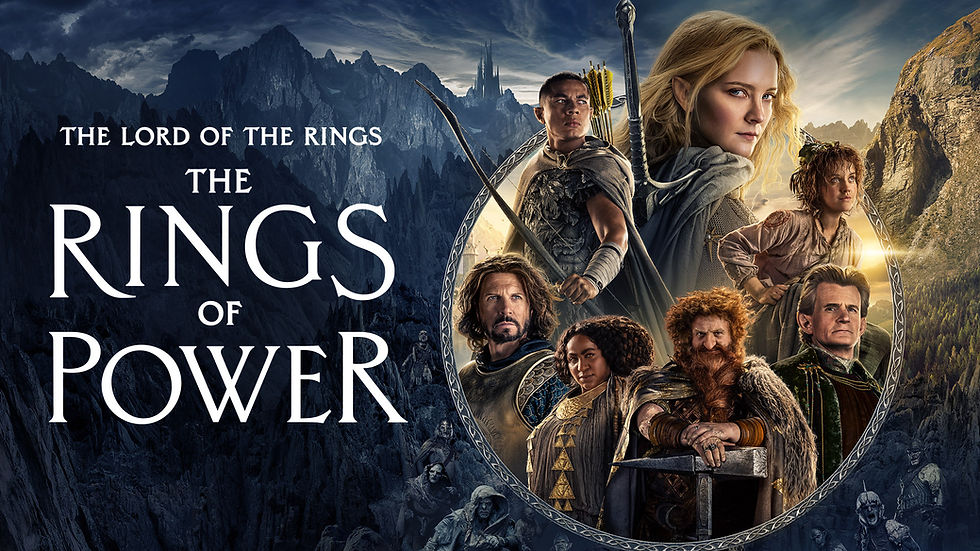
“Ambitious enough to make you gasp, scatterbrained enough to make you argue at dinner parties — but always, oddly, mesmerizing.”
When Amazon first announced The Lord of the Rings: The Rings of Power, the internet collectively clutched its mithril. How could anyone — even with billions in backing — dare revisit Middle-earth after Peter Jackson’s monumental films? Two seasons later, the question has changed. Now it’s: how far can this re-forged legend go?
This is the full story — production to premiere, score to script, canon to controversy — of The Rings of Power seasons 1 and 2: the largest, most polarizing, and, in moments, most beautiful TV experiment of the decade.
A KINGDOM BUILT OF GOLD AND STUDIO LIGHTS

Inside the most expensive gamble in the history of television
Before Galadriel ever raised her sword or Númenor’s harbor shimmered under the golden sun, there was an equally mythic tale behind the camera — one of ambition, corporate prophecy, and an almost absurd amount of gold.
When Amazon Studios acquired the global television rights to The Lord of the Rings in 2017, the cost of the deal alone reportedly topped $250 million — just for the privilege of playing in Tolkien’s sandbox. The total investment for The Rings of Power’s first seasons would eventually soar to a rumored $700 million, making it the most expensive television production ever mounted. Even in an era of streaming giants burning cash for prestige, that number turned heads across Hollywood.
“You could build actual Númenor for that money,” one industry executive quipped when the budget leaked.
The Stakes: Tolkien Meets Bezos
This wasn’t just another fantasy series — this was Amazon’s statement of intent. Jeff Bezos, a self-proclaimed Tolkien devotee, reportedly wanted the company to have its own Game of Thrones, a crown jewel capable of defining Prime Video’s brand on the world stage. The stakes were mythic: failure wouldn’t just hurt ratings — it would bruise a corporate titan’s pride.
To achieve the grandeur Amazon envisioned, the studio went big — very big. Five showrunners were courted before the company settled on J.D. Payne and Patrick McKay, two relatively untested screenwriters and lifelong Tolkien enthusiasts. Their pitch promised something daring: “a story about the dawn of evil — the moment the light starts to fade.”
The Vision: Tolkien’s Second Age Reborn

Payne and McKay didn’t want to retell The Lord of the Rings; they wanted to mine the myth beneath it. Tolkien’s Second Age — thousands of years before Frodo’s journey — was fertile ground, rich with the rise of Sauron, the forging of the Rings, and the fall of Númenor. It was a period only sketched in Tolkien’s appendices, offering creative freedom balanced by sacred text.
The challenge? Turning dense, biblical worldbuilding into character-driven television that could attract both lore scholars and casual streamers.
Location, Location, Legend

Season 1 filmed in New Zealand, returning to the cinematic homeland of Peter Jackson’s trilogies. It wasn’t just fan service — the geography’s mythic resonance is unmatched: mist-choked valleys, emerald hills, and silver fjords that seem carved from Tolkien’s imagination.
The production sprawled across 6,000 crew members, dozens of sound stages, and a small army of VFX artists. Each kingdom had its own aesthetic vocabulary:
Lindon gleamed with sunlight and geometry — Elven perfection in visual form.
Khazad-dûm hummed with dwarven practicality and warm stone.
Númenor was a sunlit Atlantis, equal parts majesty and hubris.
But when Amazon decided to shift production for Season 2 to the United Kingdom, the move signaled more than logistics. It was a cultural pivot. The UK base offered proximity to Pinewood Studios, a stronger tax incentive, and access to British craft traditions — costumes, armor, set artisans — that rival Hollywood’s best. Visually, the show grew darker, moodier, less pastoral, more imperial.
The Pandemic Trials
No saga this size escapes hardship. Season 1’s shoot, originally slated for 2019–2020, collided head-on with the COVID-19 pandemic. Entire production lines shut down; international cast quarantines stretched schedules. The downtime, however, allowed the team to refine worldbuilding — sets became richer, scripts more cohesive, and the camera language more deliberate.
When the world reopened, The Rings of Power had quietly evolved from a high fantasy experiment into a near-military operation — complete with its own internal economy of artists, smiths, engineers, and lore consultants.
The Studio’s Crown Jewel (and Burden)

For Amazon, this wasn’t just about art — it was about identity. Prime Video’s content slate had strong offerings (The Boys, Jack Ryan), but none had the cultural weight of Tolkien. Rings of Power was meant to be the cornerstone of Prime’s brand — a tentpole capable of justifying the subscription model itself.
When the show premiered in September 2022, it shattered Prime’s records: 25 million global viewers in 24 hours, Amazon’s biggest launch in history. Internally, it was hailed as a success. Externally, the reviews were mixed — but the spectacle was undeniable.
The Numbers Behind the Myth
$700M+ estimated cost (rights + two seasons + marketing)
22 million bricks of real stone used for Númenórean sets
1,800 costumes hand-sewn, with embroidery derived from Elvish runes
20 terabytes of VFX data per episode on average
Filming locations across 14 New Zealand sites (S1), 9 UK counties (S2)
When Industry Meets Legend

Season 2’s move to the UK also symbolized Amazon’s pivot from nostalgia to legacy-building. Rings of Power is now less about proving it can rival Game of Thrones and more about securing Tolkien’s world as Amazon’s proprietary mythos — a perpetual IP fountainhead for spin-offs, interactive media, and tie-ins.
But therein lies the irony: the more the studio tries to command Middle-earth, the more it must answer to Tolkien’s spirit — a world explicitly distrustful of power. In that sense, the show’s title feels prophetic not just for the story, but for the production itself.
“Amazon didn’t just buy a franchise; it bought a myth. And myths have a way of humbling even kings.”
CHARACTERS REBORN: THE NEW FELLOWSHIP

Inside the casting, evolution, and emotional core of Middle-earth’s second age
Every legend is only as strong as the souls who carry it. Where Peter Jackson’s Lord of the Rings trilogy immortalized its cast — the hobbits’ fellowship of friendship, Viggo Mortensen’s noble stoicism, Cate Blanchett’s serene divinity — The Rings of Power faced a near-impossible task: to rebuild mythic archetypes for a new generation without imitation or irony.
Amazon’s casting team, led by UK veteran Kate Ringsell, embarked on a global search that spanned four continents, auditioning thousands of actors. Their mission wasn’t star power but presence — performers who could suggest ancient souls inhabiting mortal flesh.
“We wanted faces that felt timeless,” Ringsell later said. “Actors who looked as if they had walked Middle-earth for a thousand years.”
MORFYDD CLARK AS GALADRIEL

The warrior reborn
No choice defined the series more than Morfydd Clark’s Galadriel. Gone is the ethereal queen from Lothlórien; in her place stands a tempest — a soldier-saint driven by trauma. Clark’s Galadriel hunts shadows across frozen tundra and molten plains, blurring heroism with obsession.
In Tolkien’s appendices, Galadriel is proud, wise, and restless, but rarely a sword-wielder. The showrunners reimagined her as a crusader at the Second Age’s dawn, grounding her supernatural wisdom in emotional endurance. Clark trained in stunt combat for six months, performing most of her action scenes herself, often against green-screen hordes of Orcs.
Critics called her performance “fierce, flinty, and fearlessly modern.” Fans were divided — some hailed her as a feminist reinterpretation; others missed the ethereal calm of Blanchett. Yet by Season 2, Clark’s Galadriel softens into something closer to Tolkien’s archetype: tempered by grief, wiser, sadder, still burning.
“She’s not flawless,” Clark told Empire. “She’s a mirror for what happens when light refuses to yield to darkness — and risks becoming it.”
ROBERT ARAMAYO AS ELROND

The diplomat-architect of destiny
Robert Aramayo, previously young Ned Stark in Game of Thrones, brings cerebral gravitas to Elrond — the half-elf who will one day host the Council of Rivendell. Aramayo’s Elrond is part politician, part idealist, and fully caught between worlds.
His friendship with the Dwarf Prince Durin IV (Owain Arthur) provides the show’s warmest chemistry — an odd-couple bond equal parts banter and heartbreak. Their scenes, especially the mithril-mine sequence in Season 1 and their reconciliation in Season 2, anchor the sprawling plot in genuine intimacy.
Aramayo reportedly immersed himself in Tolkien’s linguistic notes, studying Quenya and Sindarin phonetics to perfect Elrond’s cadence. That dedication pays off — his every line hums with careful restraint, the sound of an immortal learning patience.
OWAIN ARTHUR AS DURIN IV & SOPHIA NOMVETE AS DISA

The heart of Khazad-dûm
If Galadriel is the fire of vengeance, Durin and Disa are the hearth of Middle-earth. Their marriage — boisterous, loving, politically pragmatic — provides warmth amid mythic chill.
Owain Arthur, a Welsh theatre actor with the build of a miner and the soul of a poet, channels dwarven humor without parody. Sophia Nomvete’s Disa, the first female Dwarf depicted on screen, is regal and radiant, her singing voice literally shaking the stone halls of Khazad-dûm.
Their dynamic — laughter over ale, tenderness amid pride — grounds the series. In Season 2, as mithril becomes the axis of greed and salvation, their relationship fractures, giving Arthur and Nomvete space for real dramatic heft.
CHARLES EDWARDS AS CELEBRIMBOR

The smith who would be god
A quiet revelation. Edwards plays Celebrimbor — the craftsman of the Rings — as a visionary blinded by perfection. His workshop scenes glow like cathedral liturgies; his obsession hums with Faustian danger.
Season 2 deepens him: manipulated by Annatar (Sauron’s fair guise), Celebrimbor’s pride curdles into tragedy. Edwards, a Shakespearean veteran, performs this corruption with devastating restraint — the slow dawning horror of a man who has gifted evil its crown.
THE HARFOOTS: NORI BRANDYFOOT & THE STRANGER

The smallest story with the biggest heart
Markella Kavenagh’s Nori Brandyfoot and Daniel Weyman’s Stranger bring levity and wonder to the saga’s heavier arcs. Their storyline — a proto-hobbit tribe wandering pre-Shire lands — splits fandom: whimsical to some, unnecessary to others.
Yet emotionally, it works. Their friendship humanizes cosmic themes: destiny, compassion, belonging. By the Season 2 finale, the Stranger’s gentle “follow your nose” line all but confirms his identity as a Maia — a proto-Gandalf or one of his order. Canon purists may bristle, but symbolically, it connects the dots between ages.
CHARLIE VICKERS AS SAURON / HALBRAND / ANNATAR

The devil in disguise
Charlie Vickers walks an impossible line: to make the Dark Lord sympathetic. As Halbrand, he’s charming, wounded, and morally gray — the rogue who earns Galadriel’s trust. When the mask drops, the performance morphs into something serpentine yet eerily human.
In Season 2, Vickers embodies Sauron’s “Annatar” phase with smooth menace — a fallen angel whose intellect seduces before it conquers. He studied Milton’s Paradise Lost and Tolkien’s notes on pride to shape his portrayal, crafting a villain closer to Lucifer than to a cackling sorcerer.
“I wanted him to believe he was right,” Vickers explained in Vanity Fair. “That’s the only way evil becomes mythic.”
CYNTHIA ADDAI-ROBINSON AS QUEEN MÍRIEL & TRYSTAN GRAVELLE AS PHARAZÔN

The fall of Númenor in two faces
The show’s political core lies here: Míriel, the devout ruler struggling to heed visions of doom, and Pharazôn, the charismatic nationalist who believes power can defy fate.
Addai-Robinson’s performance evolves from formal stoicism in Season 1 to haunted vulnerability in Season 2, after Míriel’s blinding during the eruption of Orodruin. Her prophetic blindness becomes both metaphor and narrative engine — the queen who sees too much in darkness.
Trystan Gravelle’s Pharazôn channels populist zeal with unnerving modern echoes: speeches to crowded harbors, promises of greatness, whispers of isolationism. By the Season 2 finale, his smile curdles into prophecy: Númenor’s fall is inevitable.
ISMAEL CRUZ CÓRDOVA AS ARONDIR

The first elf of color — and a new kind of hero
Arondir is both innovation and statement. A Silvan Elf stationed in the Southlands, he blends stoicism with tenderness, particularly in his romance with human healer Bronwyn. Córdova, who trained with Israeli Special Forces advisors for his combat sequences, performs with quiet dignity.
His inclusion — and the diverse casting across the series — sparked vitriolic debate among toxic corners of the fandom. Yet his presence embodies Tolkien’s deeper themes of fellowship and empathy: that heroism knows no single race or realm.
“Middle-earth was never about bloodlines,” Córdova told Variety. “It’s about courage and mercy. That’s the part I wanted to honor.”
THE ENSEMBLE AS A WHOLE
By Season 2, the cast feels lived-in — a true ensemble rather than a collection of plot threads. Relationships have matured; alliances hardened. The performances, once occasionally theatrical, now pulse with emotional credibility.
Even detractors concede that the casting’s emotional range is remarkable. Rings of Power may have started as a spectacle, but it survives because of its humanity — the tremor in Clark’s voice, the warmth of Arthur’s laughter, the flicker of doubt in Vickers’ smile.
“For all its gold and grandeur, The Rings of Power stands on something simpler: actors who make myth feel mortal.”
BEAR MCCREARY’S SONIC SPELL

How one composer turned Tolkien’s myth into music that breathes fire and sorrow
If The Rings of Power is Amazon’s most audacious visual spectacle, its soul hums in the soundscape — a monumental score that feels ancient, choral, and fiercely alive. Behind that alchemy is Bear McCreary, the Emmy-winning composer known for Battlestar Galactica, God of War, and The Walking Dead, who stepped into one of the heaviest mantles in modern music: following Howard Shore, the architect of Middle-earth’s sonic DNA.
When Amazon announced that Shore would return only to compose the series’ main title theme, leaving McCreary to score the episodes, fans were skeptical. Could anyone else channel the mythic melancholy of the Shire or the grandeur of Minas Tirith? The answer, ultimately, was yes — but not through imitation.
“I didn’t want to copy Shore,” McCreary told Rolling Stone. “I wanted to write music that sounded as if it could have inspired him.”
A WORLD SCORED FROM SCRATCH

McCreary approached the Second Age as if composing for a civilization older than history. His guiding concept: music as archaeology. Every culture, from the ethereal Elves to the subterranean Dwarves, required its own harmonic grammar, rhythm, and instrumentation.
He built over 17 distinct musical languages, each with its own scales and tonal architecture. Elvish melodies use cyclical structures and ancient modes; Dwarvish chants rely on percussive breathing and bass resonances inspired by Mongolian throat singing. Númenórean themes invoke Mediterranean polyphony, while the Harfoots’ music carries the lilt of Celtic wanderers.
McCreary worked with over 100 musicians, including choirs singing in Quenya, Khuzdul, and Adûnaic — all Tolkien’s constructed languages. The recording sessions took place in London’s Abbey Road and AIR Studios, chosen for their acoustic warmth.
THEMES OF THE SECOND AGE
Like Tolkien’s rings themselves, McCreary’s score binds disparate stories into one coherent mythos. Here are the key thematic threads that weave through Seasons 1 and 2:
Galadriel’s Theme – “The Light That Fades”
A motif of fierce resilience — part elegy, part war cry. It begins with harp and high strings, then swells into full brass as her arc shifts from vengeance to wisdom. In Season 2, the motif fractures — the melody literally played in reverse during her confrontation with Sauron, symbolizing her inner unraveling.
Sauron’s Theme – “The Veiled Lord”
Low cellos, whispering choirs, and a rhythmic pulse that never resolves. Its genius lies in its subtlety — early in Season 1, it hides beneath Halbrand’s scenes, imperceptible unless you know the pattern. By the reveal, it blooms into full darkness, reprising the same harmonic intervals used in the One Ring motif from Shore’s score — a sly musical handshake across universes.
Númenor’s Theme – “The Sea Kings”
A triumphal fanfare laced with tragedy. Brass and percussion evoke imperial confidence, while a descending countermelody foretells the island’s doom. In Season 2, after Míriel’s blinding, the theme’s tempo slows by 40%, accompanied by solo violin — a sonic funeral for a nation not yet fallen.
Khazad-dûm – “The Deep Forge”
All bass, breath, and stone. McCreary recorded a 12-person male choir in a converted quarry to capture natural reverb, layering in metallic clangs from blacksmith tools as percussion. The result: music that sounds carved, not played.
The Harfoots – “Wandering Day”
Perhaps the series’ emotional anchor. Simple folk instrumentation — penny whistle, fiddle, bodhrán — accompanies Nori and the Stranger. The song’s lyrics, co-written with McCreary’s wife Raya Yarbrough, evoke the bittersweet optimism that defines hobbitry. It became a viral hit, streamed millions of times, and nominated for a 2023 Emmy for Outstanding Original Music and Lyrics.
“When I wrote ‘Wandering Day,’ I thought about Bilbo’s voice, the one that sings in every adventure,” McCreary said. “It’s the sound of leaving home — and knowing you might never come back.”
THE TECHNICAL MYTHOS

McCreary’s studio became a miniature Middle-earth. He built unique instruments for the show:
A 24-string long harp modeled after Nordic lyres for Elven themes.
A double-sided drum layered with iron filings to produce the Dwarven rumble.
A glass harmonica for Númenor’s dream sequences, creating an otherworldly shimmer.
Each kingdom’s music used different reverberation chambers to simulate their acoustic environments — echoing caves, open harbors, forest canopies. This approach, borrowed from film scoring but expanded to serialized storytelling, gives Rings of Power one of the richest sound designs in television history.
SHADOWS AND LIGHT: THE SEASONAL ARC
Season 1 leans orchestral and melodic — a celebration of myth’s rebirth.
Season 2 darkens dramatically: motifs slow, dissonances grow, and choral passages turn more mournful. The sonic palette evolves with the story’s moral descent.
In the Season 2 finale, “Forged in Shadow,” McCreary interlaces three major themes — Galadriel, Celebrimbor, and Sauron — in a single, spiraling composition that collapses into silence as the Three Rings ignite on screen. The silence, McCreary noted, “is the sound of destiny locking into place.”
A LEGACY IN HARMONY WITH HOWARD SHORE
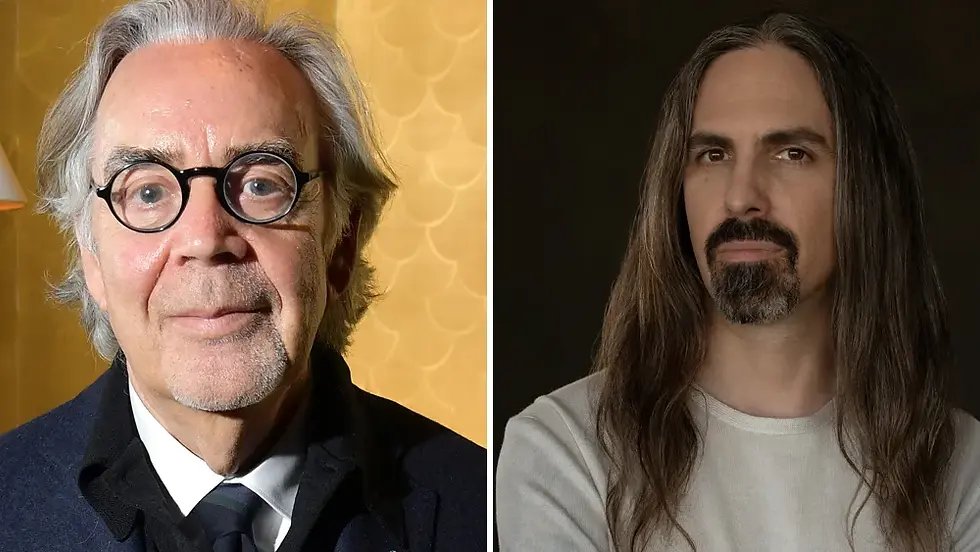
While McCreary’s work dominates the episodes, Howard Shore’s main title theme remains the ceremonial gateway — stately, mysterious, echoing his earlier Middle-earth motifs without direct quotation. Shore reportedly saw the opening titles as a “musical fossil” — a sound bridging the Second and Third Ages.
McCreary’s integration of Shore’s theme is delicate: the two share harmonic DNA but diverge emotionally. Where Shore’s compositions feel mythic and elegiac, McCreary’s are visceral and intimate. The result is continuity without repetition — a handoff between legends.
THE SOUND OF MIDDLE-EARTH RECLAIMED
By the time the credits roll on Season 2, McCreary’s music feels like a living force — not a background score, but a narrative voice. His compositions have earned Grammy nominations and widespread critical acclaim, praised for balancing grandeur with emotional subtlety.
Even Tolkien purists, once wary, have embraced the soundscape as worthy of the legend. The London Review of Books called it “music that understands myth — not just as story, but as sound older than language.”
“McCreary didn’t score The Rings of Power — he forged it. Every note feels like it was hammered from the same fire as the Rings themselves.”
THE SECOND AGE ON SCREEN

A saga of light, lies, and legacy — told in two monumental seasons
When The Rings of Power set out to dramatize Tolkien’s Second Age, it entered largely uncharted territory. The appendices of The Lord of the Rings offered fragments — the forging of the Rings, the fall of Númenor, Sauron’s deceit — but no narrative spine. Amazon’s adaptation became an act of mythic reconstruction: what might those millennia have looked and felt like?
SEASON ONE — “SHADOW OF THE PAST”
The birth of the legend, the echo of a lie
Premiere: September 2, 2022
Episodes: 8
The first season of The Rings of Power opens not with a whisper but a proclamation — Galadriel’s voice echoing over the golden light of Valinor, recounting the wars that shattered the world. From that moment, the show declares itself a bridge between myth and memory, between Tolkien’s sacred past and television’s new epic frontier.
Key Story Threads
1. Galadriel’s Hunt for Sauron
Driven by vengeance for her fallen brother Finrod, Galadriel defies Elven command and sails into the Forodwaith — a sequence of icy grandeur that sets the visual tone. Her relentless pursuit isolates her from her kin and draws her toward Halbrand, a mysterious human adrift in the Sundering Seas. Their uneasy alliance — half trust, half prophecy — becomes the emotional core of the season.
2. The Southlands and Arondir’s Vigil
Deep in the human frontier, Arondir (Ismael Cruz Córdova) discovers a growing darkness beneath the soil. His storyline — a blend of spiritual duty and forbidden love with the healer Bronwyn — culminates in an orc siege sequence that rivals Jackson’s Helm’s Deep for tension. The climactic eruption of Mount Doom at season’s end literally forges Mordor, transforming the lush Southlands into shadow.
3. Khazad-dûm and the Light of Mithril
In luminous contrast, Elrond and Prince Durin IV’s friendship blossoms beneath the mountains. Their discovery of mithril — and its implied link to Elven survival — fuses mythic lore with intimate drama. The episode “Partings” (Ep. 6) features one of the series’ most powerful exchanges: Elrond swearing loyalty not by crown or creed, but by stone and breath.
4. Númenor Rises
Introduced mid-season, Númenor dazzles as a sunlit empire poised on the brink of hubris. Queen Míriel’s visions of drowning cataclysm lend mythic dread to the grandeur. The design, inspired by Byzantine architecture and Art Deco, reflects a civilization gilded with denial.
5. The Stranger and the Harfoots
Amid cosmic wars and royal politics, the Harfoot storyline provides oxygen — earthy humor, nomadic folklore, and the tender mystery of the Stranger. His meteor-fall arrival, captured in a single unbroken tracking shot of fire and wonder, remains one of television’s most expensive visual effects to date.
Key Episode: “Udûn” (Episode 6)
A technical and narrative triumph. The battle for the Southlands merges practical explosions with digital lava simulations. When the volcano erupts and ash swallows the sun, the screen goes gray — a moment critics called “the birth of Mordor in real time.”
Season One in Tolkien Canon
Canon Event | Series Interpretation | Divergence |
Sauron’s Reemergence | Disguised as Halbrand | Compresses timelines |
Forging of the Rings | Introduced in finale | Happens centuries earlier in canon |
Númenor’s Political Divide | Seeds planted | Expanded beyond text |
The Stranger’s Arrival | Invented | Possibly linked to Blue Wizards |
Southlands → Mordor | Invented location | Mythically consistent |
SEASON TWO — “THE FIRES OF DECEIT”
The masks fall, and the Rings are forged
Premiere: October 2024 (Amazon Prime Video)
Episodes: 8
Season 2 steps out from its predecessor’s prologue feeling into a story fully alive — darker, denser, more confident. If Season 1 built the world, Season 2 corrupts it.
Key Story Threads
1. Sauron Revealed — and Reforged
The season opens with Sauron wandering Middle-earth under his true guise: Annatar, the “Lord of Gifts.” Charlie Vickers transforms his performance — gone is Halbrand’s scrappy charm; in its place, an angelic manipulator whose intellect seduces Celebrimbor and the Elven elite.
His interactions with Galadriel pulse with tension: not just enemy and foe, but mirror and flame. Their dialogue in the episode “Light Unending” — staged within Eregion’s forges, bathed in molten gold — is an operatic two-hander of seduction and resistance.
2. The Forging of the Rings
Episodes 6-8 chronicle the crafting of the Three. The forging scenes, choreographed like religious ritual, feature Bear McCreary’s score rising through hammer strikes in perfect 7/8 rhythm. The moment the molten gold solidifies, the music collapses into silence — a narrative breath before destiny roars back.
3. Númenor’s Unraveling
Pharazôn’s populist movement tightens its grip as Míriel returns home blind and broken. The city’s once-gleaming towers now cast long shadows — production designer Ramsey Avery built partial practical sets in Bray Studios, using tiered scaffolding to emulate the island’s cliffside verticality. The season ends with Pharazôn’s coronation — a triumph filmed like a funeral, foreshadowing the cataclysm to come.
4. The Dwarves and the Price of Greed
Deep within Khazad-dûm, mithril becomes both blessing and curse. Durin IV and Disa’s moral conflict sharpens: their attempt to mine deeper echoes Balrog-lore without showing the creature directly. In “Songs of the Deep,” Disa’s lament literally shakes the cavern — an in-world acknowledgment that sound itself can awaken doom.
5. The Stranger’s Journey East
Accompanied by Nori, the Stranger travels beyond Rhûn — a landscape of dying rivers and memory. Their story touches Tolkien’s Unfinished Tales, hinting at the origins of the Istari (Wizards). The finale’s closing line — “This path leads west, to the shadow’s source” — sets up the moral geography for Season 3.
Key Episode: “Forged in Shadow” (Episode 8)
The Rings are born. Fire, water, gold, and sorrow merge in a 12-minute non-verbal sequence. McCreary’s interwoven motifs culminate in a final bell tone — recorded from an actual bronze ring — as Galadriel whispers, “Three for the Elven-kings…” Critics hailed it as “Tolkienian opera for television.”
Season Two in Tolkien Canon
Canon Event | Series Interpretation | Divergence |
Forging of the Three Rings | Central focus | Faithful in essence |
Sauron’s Annatar Disguise | Fully dramatized | Compressed timeline |
Númenor’s Downfall | Approaches | Expanded politically |
Rise of Mordor | Complete | Combines centuries |
Origins of Wizards | Reinterpreted | New mythic link |
THE TOLKIEN CANON MAP: THE SECOND AGE CHRONOLOGY

Era | Major Canon Events | Adaptation Focus |
Early Second Age | Founding of Lindon; first Númenórean voyages | Referenced in prologue |
S.A. 500-1000 | Sauron begins corrupting Middle-earth | Embodied in Halbrand/Annatar arc |
S.A. 1200-1500 | Sauron deceives the Elves; Rings of Power forged | Seasons 1-2 core timeline |
S.A. 1600 | One Ring forged; Barad-dûr rises | Foreshadowed |
S.A. 3262-3319 | Ar-Pharazôn captures Sauron; Númenor’s fall | Upcoming seasons |
S.A. 3441 | Sauron defeated by Last Alliance | The bridge to The Lord of the Rings |
(S.A. = Second Age Year)
Visually, the series compresses this entire era into roughly a single human lifetime — a creative necessity, but one that underscores the thematic heart of the show: the brevity of mortal ambition against the endless patience of the immortal.
THEMES ACROSS BOTH SEASONS
1. Immortality vs. DecayElves fight time itself; humans chase legacy; dwarves court death through greed. Every plotline circles one philosophical question: What does it mean to endure?
2. Power and SeductionFrom Annatar’s whisper to Númenor’s nationalism, the show reframes Tolkien’s moral axis — evil rarely shouts; it persuades.
3. Fellowship ReforgedThough scattered across continents, the characters embody Tolkien’s central creed: cooperation over domination, compassion over certainty.
“If The Lord of the Rings was about ending an age, The Rings of Power is about how that age began — not with darkness conquering light, but with light burning itself too brightly.”
THE TOLKIEN CANON MAP
What’s true, what’s tweaked, and what’s TV magic
Element | Canon? | Source & Commentary |
Second Age Setting | ✅ | From The Silmarillion and Appendices. |
Galadriel as Warrior | ⚠️ | Tolkien hinted at pride and restlessness; the combat arc is invention. |
Halbrand / Annatar Fusion | ❌ | “Halbrand” is a show creation; Sauron’s fair form is Annatar. |
Númenor’s Politics | ✅ | Mirrors Akallabêth’s imperial decay. |
Pharazôn vs. Míriel | ⚠️ | Re-timed to dramatize their rift earlier. |
Adar (Corrupted Elf) | ⚠️ | Inspired by hints in The Silmarillion that Orcs were twisted Elves. |
The Stranger (Meteor Man) | ❌ | No canon wizard in the Second Age; purely thematic invention. |
Forging of Rings | ✅ | From Tolkien’s core myth, though chronology condensed. |
Mithril–Silmaril Connection | ❌ | Entirely non-canonical, visual metaphor for greed and light. |
Mount Doom’s Creation | ⚠️ | Original cause, consistent with legend’s imagery. |
Harfoots’ Migration | ⚠️ | Hobbits are said to exist later; used symbolically for “small hearts shaping big worlds.” |
CRITICAL & AUDIENCE RECEPTION

A billion-dollar gamble, a divided fandom, and a legend reborn in the age of streaming
When The Rings of Power premiered in September 2022, it wasn’t just a show — it was a cultural event, a litmus test for the future of epic television. Amazon Prime Video framed it as its crown jewel, launching in more than 240 territories simultaneously, subtitled in over 30 languages, and backed by a marketing blitz that rivaled a Marvel film rollout.
What followed was a reaction as vast and contradictory as Middle-earth itself.
CRITICAL RESPONSE: SPLIT LIKE THE ONE RING
The early reviews were glowing in tone and cautious in substance. The Guardian praised the “jaw-dropping visual splendor,” Rolling Stone called it “fantasy television operating at operatic scale,” while The New York Times noted that it sometimes felt “more reverent museum piece than living myth.”
Aggregators painted the picture:
Rotten Tomatoes Critics: 84% (Season 1) → 88% (Season 2)
Audience Score: 38% → 62%, showing clear improvement.
Metacritic: 71 → 76.
By Season 2, even skeptics admitted the tone had matured — tighter pacing, deeper emotion, bolder writing. Many compared the jump in quality to Game of Thrones’ own transformation between its first and second years.
“Season 2 finally trusts its own mythology,” wrote Variety. “It stops proving it’s Tolkien and starts feeling Tolkien.”
FAN REACTION: THE BATTLE OF THE COMMENT SECTIONS

No modern fandom is without fire. Hardcore Tolkien purists criticized compressed timelines, racial diversity in casting, and new characters not found in the appendices. Others celebrated exactly those choices as necessary for a living adaptation.
Online, the show weathered coordinated “review-bombing” campaigns — Amazon even implemented a 72-hour review delay to filter bad-faith responses. Yet on the ground, audiences were far less divided: by Amazon’s data, more than 100 million viewers sampled Season 1, and nearly 60 million completed all eight episodes — a retention rate higher than The Wheel of Time or The Boys.
By Season 2, fandom energy shifted. The Halbrand → Sauron reveal ignited viral reaction videos; Bear McCreary’s “Wandering Day” hit TikTok playlists; cosplay conventions filled again with Númenórean armor.
“Middle-earth discourse is messy,” one Reddit user joked, “but at least we’re arguing about Elves again instead of algorithms.”
STUDIO RECEPTION: AMAZON’S PRECIOUS
Internally, Amazon Studios declared Rings of Power a success. Jennifer Salke, head of Amazon MGM Studios, called it “a foundational universe for Prime Video for decades.”
Financially, it justified its cost by driving Prime Video subscriptions up 7% worldwide in Q4 2022 — the platform’s largest single-quarter growth to date. The show also delivered prestige dividends: Emmy nominations for Production Design, Original Score, and Main Title Theme, plus wins at the Visual Effects Society and Costume Design Guild awards.
Executives green-lit Seasons 3 and 4 in early development, confirming Amazon’s intent to map the entire Second Age through Númenor’s fall and the Last Alliance of Elves and Men.
50 Behind-the-Scenes Facts About The Rings of Power
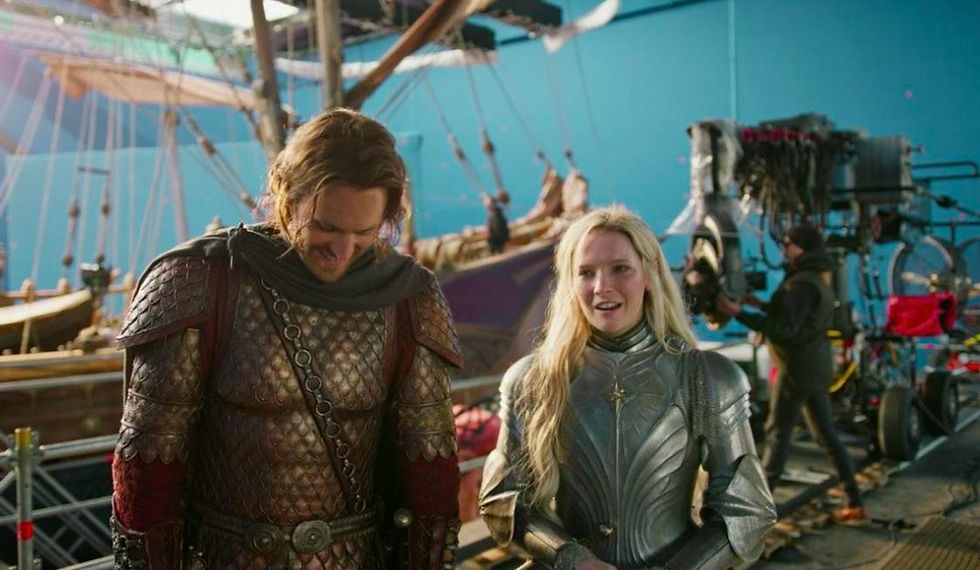
From molten mithril to Middle-earth Mondays — the epic secrets behind Amazon’s billion-dollar fantasy
Filming & Production Design
Over 60% of Khazad-dûm’s interiors were built practically — complete with 7,000 programmable LED “crystals” simulating mithril’s glow.
The production used actual molten bronze for Eregion forge lighting — real heat, real danger, real shimmer.
The “light tables” of Lindon used glass floors lit from below to give Elves their trademark inner glow.
The Southlands’ transformation into Mordor involved biodegradable maize ash spread with farm tractors — nicknamed “Mordust.”
Númenor’s harbor was built as a 50-foot miniature model floating in a tank — a tribute to Peter Jackson’s “big-atures.”
The “Udûn” siege sequence took 27 consecutive night shoots with 600 extras and live pyrotechnics.
To mimic volcanic fog, the crew pumped evaporated vegetable oil mist through 100 meters of tubing.
A hidden camera shot the volcano eruption at 1,000 frames per second, blending miniature lava pours with digital eruption plates.
A dedicated “Weather Team” monitored real storms so cloud formations matched continuity across shots.
Some Númenor exterior shots were filmed on Auckland’s waterfront, digitally extended into the island capital.
Costumes, Armor & Props
Over 2,000 pieces of armor were handcrafted for Season 1 alone.
Galadriel’s silver breastplate bears Elvish engraving reading “Hope is never mere.”
Númenórean helmets draw from Art Deco and Byzantine motifs, with 24-karat gold leaf applied by hand.
Each Dwarven beard took up to five hours to braid and set, using yak hair dyed with mineral pigments.
The Orc prosthetics used 12 layered silicone masks, allowing pores to sweat naturally on camera.
Weta Workshop revived 20-year-old molds from The Lord of the Rings for Orc teeth and ears.
The Three Elven Rings were actually forged by jeweler Jens Hansen’s studio — in 18k gold with lab-grown gems.
Galadriel’s underwater cloak was made of silk chiffon dyed with squid ink for fluid movement.
Númenórean robes were painted with salt to create a sun-bleached effect symbolic of fading glory.
Durin’s crown jewels are carved from actual quartz, not resin — they refract the set lighting naturally.
Music & Sound Design
Bear McCreary’s orchestra featured 90 musicians and 40 choristers, blending Celtic and Nordic instrumentation.
Howard Shore’s main title theme was written to follow Quenya poetic meter — 12 syllables per phrase.
McCreary built a 15-foot Númenórean horn out of fiberglass; it required two players and a ladder.
The sound of mithril was created from Tibetan bowls, struck crystal glasses, and microwave hums.
Orc war chants were recorded using a Māori haka troupe, then layered with slowed jackal growls.
Harfoot songs were inspired by Irish Traveller and Romani folk rhythms.
For Galadriel’s underwater sequence, dialogue was captured using bone-conduction microphones — a TV first.
The final “Forging of the Rings” theme shifts into 7/8 time to match hammer strikes — literally forging rhythm into music.
Some percussion came from recorded anvils used as instruments on set.
Each kingdom (Elf, Dwarf, Man) was given its own modal scale; Númenor’s is Phrygian dominant, hinting at arrogance.
Languages & Lore
Tolkien linguist David Salo created new Quenya verb tenses to reflect Second-Age dialect evolution.
Adûnaic, Númenor’s human tongue, was expanded into a fully functional language with its own alphabet.
Harfoot speech mixes Irish syntax with Yorkshire vowel tones.
Orcish was designed as “debased Quenya,” following Tolkien’s note that Orcish began as mockery.
The Dwarves’ Khuzdul got new mining idioms — like “the mountain remembers” (roughly “we owe the stone”).
The Stranger’s runes include references to The Lost Road’s early Númenórean myths.
Linguistic coaches had color-coded scripts: blue for Elvish, red for Adûnaic, green for Harfoot dialect.
Each Númenórean noble house had a unique sigil written in Adûnaic calligraphy — visible on their banners.
Language recordings for post-production were done at 0.8x speed so actors could match Elvish cadence in ADR.
Scripts contained side-bars of Tolkien references for actors — essentially mini-encyclopedias per scene.
Stunts, Effects & Filming Challenges
Charlie Vickers (Halbrand/Sauron) trained six months in Filipino Kali martial arts for his sword style.
His duel in “Partings” used real steel blades, with digital safety removal in post.
The Warg was a hydraulic puppet weighing 800 lbs, operated by three puppeteers.
Galadriel’s ocean sequence involved Morfydd Clark free-diving for over two minutes per take.
For the “sea trial,” the production built a 20-foot water tank with artificial current jets.
The ash storm sequence used biodegradable cornflakes, tinted gray — safe for eyes and lungs.
The Stranger’s meteor impact was filmed with a motion-controlled sled dragging a flaming rig at 60 mph.
The Balrog tease in Season 2 used a mix of dry-ice fog and volumetric lighting, not full CGI.
Disa’s singing scene vibrated an actual subwoofer stage floor to simulate “resonant mining.”
Some Orc extras fainted under 35-pound prosthetic armor during desert sequences — hydration packs were later built into costumes.
Production Lore & Fun Facts
The writers’ room began every Monday with a Tolkien reading — dubbed “Middle-earth Mondays.”
One anonymous Tolkien Estate member secretly annotated scripts for lore accuracy.
Celebrimbor’s forge includes the word “Annatar” hidden in reflective Elvish runes on an anvil.
Three maps of Middle-earth were drawn before final approval — early versions misplaced Eregion by 200 miles.
The Númenórean library set contained real books printed with Quenya poetry inside.
The moon reflection in Episode 8 subtly mirrors Tolkien’s “JRRT” signature monogram.
A hidden cameo: concept artist John Howe appears as an aged mariner in the Númenor port crowd.
The horses used for Númenor were Andalusians trained for six months in synchronized gallop choreography.
Each director chose a personal “color palette” — Brändström’s episodes lean gold and emerald, while Bayona’s skew colder blue-gray.
The cast nicknamed the production base “Second Breakfast Studios.”
Favorite Crew Quotes
“We weren’t adapting a book — we were adapting the silence between books.” — JD Payne, Co-showrunner
“Every frame needed to feel like it was painted by time.” — Charlotte Brändström, Director
“You don’t make Middle-earth; you join it.” — Bear McCreary, Composer
“If you don’t come home with fake ash in your shoes, were you really in Mordor?” — Cynthia Addai-Robinson (Queen Míriel)
CULTURAL LEGACY

How Middle-earth found new life in the streaming age — and why it still matters
When The Rings of Power debuted, it wasn’t just a television show — it was an act of resurrection. Two decades after Peter Jackson’s cinematic trilogy redefined fantasy filmmaking, Amazon’s series reintroduced Tolkien’s mythology to a generation raised on Marvel, Game of Thrones, and algorithm-driven content. It was both a gamble and a gesture: could myth survive the age of streaming?
The answer, it turns out, is complex — and quietly revolutionary.
Reclaiming the Epic in the Era of Franchises
In a media landscape dominated by multiverses and prequels, The Rings of Power stood apart for its unapologetic sincerity. No ironic quips, no postmodern detachment — just Elves, destiny, and doom, played straight.
Critics and scholars alike pointed out that this was fantasy without cynicism, a rare return to earnest heroism in a post-Thrones world. The show’s decision to treat virtue, hope, and craftsmanship as serious themes — not nostalgia — gave it a tone that felt almost radical.
“In an era obsessed with antiheroes,” wrote The Atlantic, “The Rings of Power dares to ask if goodness can still be interesting.”
The series reawakened a cultural craving for grandeur with purpose — for stories that speak to creation, corruption, and the long arc of history.
The Return of Middle-earth Tourism
Just as Jackson’s films turned New Zealand into a pilgrimage site for Tolkien fans, The Rings of Power sparked a second wave of Middle-earth tourism.
Following Season 1’s debut, visitor numbers to Auckland, Hauraki-Coromandel, and Fiordland — the real-world stand-ins for Eregion, Númenor, and the Southlands — surged by nearly 25%. Local councils introduced new “Second Age Trails,” blending eco-tourism with cinematic history.
Fans have begun reenacting the “Sea Trial” sequence on sailing charters and hosting cosplay festivals in Thames and Piha. New Zealand’s film industry credits Rings of Power with revitalizing post-pandemic production jobs, describing it as a “lifeline disguised as a legend.”
Music, Memes & Modern Mythology
Bear McCreary’s soundtrack didn’t just score the show — it infiltrated pop culture. The Harfoot anthem “This Wandering Day” trended on TikTok for weeks, inspiring acoustic covers and even a viral remix called “Harfoot Lofi Vibes.”
Meanwhile, Galadriel’s line “Touch the darkness once more” became a meme template for everything from morning coffee to Monday meetings.
On YouTube, entire channels are dedicated to thematic breakdowns of the score, while Wandering With Firelight, a fan podcast, produces hour-long “soundscape dissections” that treat McCreary’s motifs like sacred texts.
The result? Tolkien’s music — and moral philosophy — are alive again in the spaces where memes usually go to die.
Tolkien in Academia (Again)
The show’s arrival reignited academic discourse around Tolkien studies, medievalism, and adaptation theory. Universities from Oxford to UC Berkeley launched new courses comparing The Rings of Power’s Second Age storytelling with Tolkien’s unpublished drafts.
Scholars have praised the show for exploring themes Tolkien left deliberately open — the tension between light and pride, or the seductive ethics of creation. A 2024 symposium at Marquette University (home to Tolkien’s manuscripts) titled “Forging the Second Age” drew record attendance, discussing how modern screenwriting reinterprets mythic morality.
“The show does what Tolkien’s appendices invite,” said Dr. Dimitra Fimi, a leading Tolkien scholar. “It imagines what happens in the margins — and in doing so, it keeps the myth alive.”
Representation and Reimagining Tradition

Perhaps the show’s most lasting legacy is its diversity of portrayal. By casting actors of color as Elves, Dwarves, and Harfoots, The Rings of Power redefined who gets to belong in myth.
While the choice drew controversy among purists, it also inspired a new wave of inclusivity in fantasy media. Cosplayers of color spoke of finally seeing themselves “in armor and light.” Fan campaigns like #MyMiddleEarthToo spread across Twitter, celebrating representation as a continuation — not deviation — of Tolkien’s humanism.
The show’s visual language — golds and greens blending with browns and bronze — reframed Middle-earth as a multicultural mythos, closer to Tolkien’s own idea of a world “filled with mingled tongues and faces.”
Digital Fandom: A New Kind of Fellowship

The online fanbase around The Rings of Power evolved beyond traditional forums. Discord servers became digital taverns for lore debates, fan art showcases, and Second Age watch parties.
TikTok creators dissect Elvish dialects and costume symbolism. Reddit threads span thousands of comments analyzing the moral grayness of Halbrand’s choices. On Tumblr, a thriving “Second Age aesthetic” tag blends Tolkien quotes with moody landscape photography and slowcore playlists.
The fandom became its own meta-narrative — a modern Fellowship bound not by geography, but by Wi-Fi and shared wonder.
Aesthetic & Design Influence

Art schools and concept design forums cite Rings of Power’s production design as a return to “textured realism” — practical sets, handcrafted props, natural light. The show helped reignite interest in analog craftsmanship within digital production.
Fashion designers have referenced the Elven silhouettes and Númenórean geometric patterns in couture collections. Even jewelry brands launched “Eregion lines” inspired by the show’s forging scenes, some using recycled metals to symbolize renewal.
The Meta Legacy: Myth in the Age of Capital
Perhaps most fascinatingly, The Rings of Power exists as both a story about power and a product of power — a myth born within a global tech empire. Critics note the irony: a show warning of corruption and ambition produced by one of the world’s most powerful corporations.
And yet, this paradox deepens its resonance. The show becomes a mirror — both for Sauron’s seductive efficiency and for our own fascination with control, creation, and consequence.
“It’s art about the ethics of empire,” wrote The New Yorker. “And Amazon, knowingly or not, is the empire in question.”
In this way, The Rings of Power becomes one of the few modern blockbusters aware of its own mythology — a story about making stories, a forge reflecting its own fire.
The Light That Endures
Today, Middle-earth is once again a living language — in memes, music, cosplay, academia, and the quiet heart of fandom.
For those who grew up with Jackson’s Fellowship or discovered Tolkien through TikTok, The Rings of Power offered something rare: an invitation back to wonder.
It reminded audiences that the heart of Tolkien’s myth was never just about defeating darkness — it was about how light endures despite it.
“Even the smallest story,” said showrunner Patrick McKay, “can change the fate of an age.”
And that, perhaps, is The Rings of Power’s truest legacy: not perfection, but persistence — the faith that every age, even ours, still needs its legends.
THE ROAD AHEAD

Season 3 (filming 2025) promises the Downfall of Númenor, the Seven and Nine Rings, and the first whispers of the Last Alliance. Showrunners Payne and McKay describe it as “the age of fire and flood — when beauty and corruption become indistinguishable.”
Bear McCreary returns, with rumor of Howard Shore composing a new “Requiem for Númenor.” The move from the UK to expanded soundstages in Berkshire ensures continuity with Season 2’s darker tone while allowing larger-scale water-tank sequences.
Amazon plans to keep the narrative contained to five seasons — a beginning, middle, and end — echoing Tolkien’s own cyclical mythic structure.
EPILOGUE: A LIGHT THAT ENDURES
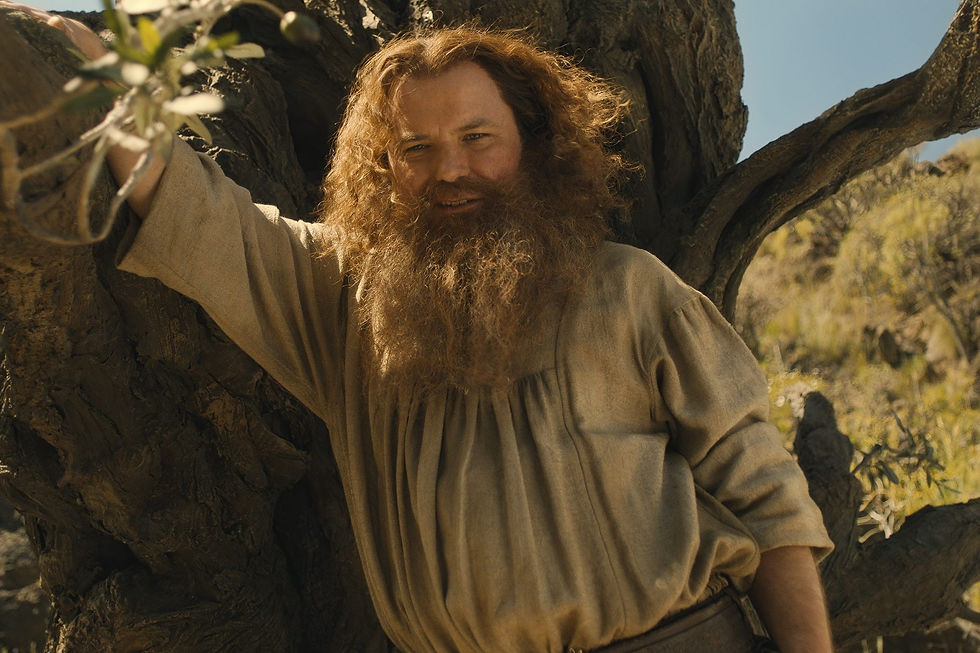
Twenty years after Peter Jackson’s trilogy defined cinematic fantasy, The Rings of Power proves Middle-earth still has stories to tell — not as nostalgia, but as reflection. Beneath the billion-dollar sheen, the show’s beating heart remains Tolkien’s eternal question:
“What power is worth the cost of your soul?”
For all its imperfections, The Rings of Power answers with artistry, courage, and a willingness to fail gloriously — a rare thing in corporate storytelling. It may yet grow into the legend it seeks to honor. And if it doesn’t, it has at least reminded the world that myth still matters, that hope can still shine against shadow, and that even the smallest stories — a wandering Harfoot, a forged ring, a whispered theme — can change the fate of an age.
“Middle-earth endures not because it’s perfect, but because it dares to dream in full daylight — unironically, unapologetically, beautifully.”


Comments