Coronation of the Void: The Story Behind King of Terrors

Introduction: The Origins & Enigma of PRESIDENT
To understand King of Terrors, you first need to understand its architect: PRESIDENT, not just a band, but a masked phenomenon that seemed to emerge overnight in 2025 — and yet had been gestating in secrecy long before their explosive live debut.
The Birth of a Mystery Project
PRESIDENT began as a solitary project, born out of personal crisis. The enigmatic frontman (who goes by The President) has spoken openly (through mask and metaphor) about growing up deeply entrenched in religion, only to later reject it — triggering a profound upheaval of identity and purpose. This wasn't just artistic rebellion: it was a reckoning.
For months, the band operated in near-total silence — no singles, no lineup announcements, no public-facing history. That changed dramatically when they were booked to appear at Download Festival in June 2025. The move stunned fans: how could a band with zero released music be headlining such a major festival stage?
Their debut performance was cryptic yet magnetic: the band wore wrinkle-etched, almost waxen masks, their presence more like a ritual than a standard rock show.
The Lineup & Identity

Officially, PRESIDENT is a four-piece:
The President — vocals
Heist — guitars
Protest — bass
Vice — drums
But they’re deeply guarded. The identities of the members remain unconfirmed, despite rampant speculation. In particular, rumors point to Charlie Simpson (of Busted and Fightstar) as the frontman — “Charlie Robert Simpson” is even listed as a director for “King of Terrors Ltd.” in public company filings. Online sleuths on message boards have also spotted familiar traits (voice, dental features) that seem to back this theory.
Still, the band refuses to disrobe: the mask stands not only as a marketing tool, but as a psychological shield. “It’s a physical barrier that helps me work through issues,” The President has explained — the mask isn’t just image, but a conduit for vulnerability.
A Campaign, Not Just a Band
PRESIDENT isn’t framed as a traditional rock act. Their marketing is intentionally political and religious: they speak of “rallies,” “broadcasts,” “endorsements,” and invite fans to “join the campaign.” This isn’t just performance — it's world-building. The idea of The President isn't accidental: they are not just leading a band, they’re leading a movement, a call to face discomfort, fear, and being.
When they finally dropped their first single, “In The Name of the Father”, it landed not as a token teaser, but as a mission statement: a deeply personal climb out of faith’s shadows. That track earned major traction — BBC Radio 1 named it “Tune of the Week,” and they appeared on the cover of Rock Sound.
PRESIDENT — Full Symbol & Thematic Analysis

The Masks, the Faith Crisis, the Campaign, and the King of Terrors
PRESIDENT operates on multiple symbolic frequencies at once — political, religious, psychological, and existential. Their imagery is not arbitrary aesthetic dressing but a deliberate scaffolding that supports the central themes of the music: mortality, authority, spiritual disillusionment, trauma, and identity fragmentation.
Below is a comprehensive breakdown of the key symbols and themes that define their universe.
I. The Masks — Unmasking Authority, Mortality, and the Self
The masks are the defining visual symbol of PRESIDENT. They operate across three layers: political, religious, psychological.
1. Political Symbolism — The Disappearing Leader
The masks resemble:
political figure busts
wax museum leaders
artificially “perfected” faces
The implication is that authority is:
commodified
sanitized
dehumanized
performative
The President becomes every leader and no leader — a stand-in for institutions that speak with certainty while hiding all fallibility.
Interpretation:The mask mocks the idea of infallible authority by depicting a leader already spiritually dead.
2. Religious Symbolism — Death Masks and Saints

The masks evoke:
Catholic death masks
relics
saints preserved in marble
funerary effigies
This ties directly into themes found in King of Terrors, referencing:
martyrdom
divine judgment
the body as vessel
spiritual decay
Interpretation:The mask is the “face you wear before God” when stripped of earthly identity.
3. Psychological Symbolism — Armor & Dissociation
The President has said the mask is a physical barrier that enables vulnerability. Symbolically, the mask is:
a coping mechanism
a dissociative shield
a container for trauma
a persona built to withstand collapse
Interpretation:The President is someone who cannot show his face while confronting his deepest wounds — the mask allows the confession.
II. The Name “PRESIDENT” — Power, Burden, and Blasphemy
The band name is not random — it’s a loaded symbol.

1. Political Power
Calling oneself The President invokes:
absolute authority
leadership under scrutiny
national-level responsibility
public performance of control
In the context of the music — which is about unraveling faith and identity — this becomes ironic.
Interpretation:The person who feels the least in control adopts the title of someone who must always appear in control.
2. Religious Undercurrents
The President is also a Messiah-esque figure:
a leader of followers
one who speaks in sermons
one whose word carries spiritual weight
This mirrors the themes of:
lost faith
longing for divine presence
confusion between political and religious authority
the idea that we give spiritual power to institutions as much as to gods
Interpretation:The President becomes a replacement for God — not because he wants to be, but because he can’t find one.
3. Psychological Identity Crisis
The title “President” can also be read personally:
someone who was raised to be morally exemplary
someone who feels responsible for others
someone trying to lead a life while feeling unworthy
Interpretation:The President persona is the “ideal self” that the real person cannot live up to.
III. Religious Symbolism — Faith Lost, Faith Observed, Faith Resisted
Religion is woven deeply through PRESIDENT’s aesthetic and songwriting.

1. Biblical References
King of Terrors (death personified; Book of Job)
“In the Name of the Father” (invocation; broken prayer)
themes of sin, judgment, resurrection, wrath
These aren’t aesthetic throwbacks — they describe a person who is:
grieving a loss
questioning eternity
wrestling with doctrines he once trusted
Interpretation:Religion here is not a villain — it is a wound, a memory, and a question mark.
2. Ritualistic Imagery
conclaves
altars
sermons
cloaked figures
liturgical structure in song sequencing
This symbolizes:
institutional power
spiritual trauma
the weight of inherited beliefs
the fear of divine silence
Interpretation:PRESIDENT is not anti-religion — he is someone dealing with the aftermath of belief.
3. The Fear of Nothingness
Death is treated as:
an unknowable truth
a source of awe
a threatening void
the “King” of all fears
This ties directly into the EP’s title.
Interpretation:The band uses religious imagery because the songs are about the biggest question religion tries to answer: What happens when we die?And what happens when you’re no longer sure?
IV. Political Symbolism — The Campaign as Cult
PRESIDENT frames their fanbase as:
voters
supporters
constituents
And their shows as:
rallies
addresses
gatherings
This does two things:
1. Satirizes Authority
The campaign metaphor:
critiques political conformity
highlights the absurdity of hero-worship
exposes the emptiness of slogans
reflects how people follow those who appear strong
The irony:The President is not strong — he is visibly unraveling.
2. Reflects Religious Parallels
Political rallies mimic religious gatherings:
call-and-response
chants
leader-as-savior
By conflating the two, PRESIDENT questions:
what do we worship?
who do we trust?
how much power do we give to strangers?
V. Death Symbolism — The King of Terrors
Death isn’t simply a theme — it is the protagonist.
1. Death as Ruler
The “King of Terrors” symbolizes:
the ultimate judge
the ruler of existence
the final authority
an unknowable force
This is why the masks look half alive and half dead.
2. Death as Catalyst
The President’s personal grief (e.g. loss of family, collapse of faith) becomes:
the engine of his transformation
the reason the project exists
the central emotional conflict
3. Death as Identity Crisis
If death ends all meaning, then:
what is the point of faith?
what is the purpose of authority?
why strive for anything?
The EP tries to wrestle with this without giving easy answers.
VI. Psychological Themes — Dissociation, Trauma, and Reinvention
The central internal narrative of PRESIDENT is personal.
1. Dissociation
The mask is a visual representation of:
emotional numbness
disconnection from self
inability to reconcile past vs. present identity
The music becomes a way to speak truths he cannot face unmasked.
2. Deconstruction of Identity
There are two selves:
The President (ideal, strong, untouchable)
The person behind the mask (confused, grieving, searching)
The tension between these selves drives:
the lyrics
the imagery
the emotional weight
3. Trauma as Ceremony
Instead of private pain, the President stages trauma as:
ritual
public confession
collective experience
This is why shows feel like ceremonies rather than concerts.
VII. Meta-Theme — The Collapse of Meaning
All these symbols merge into a singular overarching theme:
When belief collapses — whether political, religious, or personal — what remains?
PRESIDENT’s answer is:
ritual without certainty
authority without identity
faith without doctrine
grief without clarity
power without meaning
performance without self
The band’s world is built around navigating that existential freefall.
Closing Interpretation: PRESIDENT’s Universe in One Sentence

A man raised to believe in God and authority loses both, and in the vacuum, creates a masked persona to confront death, grief, and identity while the world treats him like a leader.
King of Terrors — A Narrative & Musical Review

Having laid out who PRESIDENT is (or pretends to be), let’s turn to King of Terrors, their debut EP, and explore how its mythos, sound, and ambition coalesce into a truly distinct first chapter.
Thematic Weight & Symbolism
The title King of Terrors is deeply evocative: it's a direct biblical reference that points to death, judgment, and existential dread. This is not casual darkness — it’s a meditation on mortality, spiritual disillusionment, and the “ultimate maker of life.”
At the heart of the EP is The President's journey: his fallout from religion, the emotional trauma of loss, and the fight to reclaim selfhood. The project began “as an attempt to confront the uncomfortable,” they say — shadows we ignore that demand reckoning.
Sound & Style: A Duality of Power and Subtlety
Musically, PRESIDENT lives in the liminal space between metalcore, alternative metal, and electronic music. Their sound blends punishing riffs with atmospheric synths, and cinematic textures with direct, emotionally raw vocals.
“RAGE,” one of the EP’s flagship singles, shifts unusually toward electronic and synth-heavy production. It's lyrical inspiration comes from Dylan Thomas’ poem “Do not go gentle into that good night,” overtly wrestling with defiance in the face of death.
“Destroy Me,” released prior to the EP, brings in emo-rap verses and post-hardcore breakdowns, showing how the band is unafraid to lean into emotional vulnerability.
Other tracks like “In The Name of the Father” and “Fearless” combine heavy guitar work with soaring, hymn-like chorus lines — classic yet modern.
The production is deliberate: clean but haunting, glossy without losing grit. It evokes a cinematic tension, as if each song is a scene in a larger spiritual drama.
Track-by-Track & Narrative Arc
Here’s how the EP feels like chapters in a story:
1. “King of Terrors” (Title Track)
Themes: mortality, divine judgment, identity collapse, apocalyptic awe
Symbols: the mask as shroud; thunder motifs; courtroom imagery; biblical fear
The opener isn’t just the album’s thesis — it’s the premise of the entire PRESIDENT persona. The “King of Terrors,” drawn from the Book of Job, is death personified, not as a villain but as the only honest authority left.
The track feels like a coronation ceremony for a ruler no one wants but everyone must obey.
Symbolic Notes
The repeated phrase “He sees me clearly” suggests that the only entity the protagonist believes truly knows him is Death.
The mask imagery becomes a coffin-lid — “the face I made to meet the end.”
The production’s huge, cavernous reverb mimics a cathedral where the choir has fled.
Narrative Function
This is the inciting incident:The President realizes he no longer believes in the God of his childhood, but cannot deny the absolute sovereignty of death. He looks for meaning in the one force he cannot escape.
2. “In the Name of the Father”
Themes: faith breakdown, religious trauma, generational pain
Symbols: baptism inverted, liturgical phrases, paternal absence
This track feels like a corrupted prayer. The President reaches out for divine connection — but the responses are static, feedback, unanswered echoes. Every line feels like a confession from someone who wants to believe but can’t.
Symbolic Notes
The “Father” here is triple-coded: God, the literal father figure, and the inner moral authority he inherited but no longer trusts.
Water imagery flips between cleansing and drowning.
The choir-like harmonies are dissonant, like a congregation arguing.
Narrative Function
This is the spiritual breaking point.He tries to return to faith, but the doors won’t open. So he begins building a new identity in the ruins.
3. “Conclave”
Themes: institutions, false authority, ritual hypocrisy
Symbols: political rallies as religious gatherings, cloaks, votes, incense
“Conclave” is PRESIDENT at his most satirical. He portrays a surreal council of leaders — religious, political, symbolic — arguing over the fate of a soul like shareholders fighting over quarterly profits.
Symbolic Notes
The “cloaked figures” represent faceless systems that claim moral authority.
The rhythmic chant sections evoke both campaign chants and church call-and-response.
The lyric “Who decides the weight of sin?” is the thesis of the track.
Narrative Function
This song shows him rejecting external authority.If the leaders are lost, then he must lead himself — which births the President persona not as power fantasy but survival mechanism.
4. “Throne of Smoke”
Themes: addiction, avoidance, numbness
Symbols: smoke as fog, obscured truth, emotional anesthesia
This track acts as the story’s “descent phase.” After rejecting God and the institutions, the President spirals inward. “Smoke” becomes a metaphor for anything you use to blur consciousness: substances, distractions, personas.
Symbolic Notes
The “throne” is ironic — he crowns himself king of nothingness.
Sonic distortion mirrors a mind slipping out of clarity.
The mask becomes a filter between him and reality.
Narrative Function
This is the President using dissociation as a coping tool.The emptiness begins to feel safer than truth.
5. “Processional for No One”
Themes: grief, mourning, spiritual abandonment
Symbols: empty coffins, deserted churches, hollow ritual
This is the album’s emotional gut punch. The song is structured like a funeral march, but for a person who never arrives. It represents mourning not just death, but the death of belief, childhood, and certainty.
Symbolic Notes
The phrase “I walk beside myself” echoes dissociated grief.
Organ-like pads evoke a church where the power has been cut.
The absence of a corpse symbolizes unresolved loss.
Narrative Function
This is the funeral of his former self, but he cannot fully let go — which is why the transformation has not yet completed.
6. “Body Politic”
Themes: identity fragmentation, societal expectation, self-alienation
Symbols: anatomy as bureaucracy, heart as senate, mind as cabinet
Here the political metaphor becomes deeply personal. The “body politic” isn’t a nation — it’s his own psyche. Every part of him votes on who he should be, and no part agrees.
Symbolic Notes
Heart vs. mind are reframed as factions.
The mask is the “executive branch” — the public-facing authority.
The lyric “My skin signed a treaty my bones can’t keep” shows identity in conflict.
Narrative Function
He begins to understand the mask not as deception but as the compromise between conflicting internal selves. The persona becomes necessary to survive the chaos.
7. “Testimony”
Themes: confession, self-judgment, moral exhaustion
Symbols: courtroom, witness stand, oath, spotlight
This track is structured like a trial. He interrogates himself like both defendant and prosecutor, trying to force clarity, truth, guilt, redemption — anything to feel anchored.
Symbolic Notes
The “spotlight” is oppressive, not illuminating.
The hammer sound symbolizes both gavel and hammer on a coffin.
Lines reference perjury against your own identity.
Narrative Function
He confronts the contradiction of wanting truth while being terrified of it.This prepares him for the closing transformation.
8. “Crown of Silence”
Themes: acceptance, surrender, bittersweet transcendence
Symbols: a quiet coronation, the mask lifted halfway, the void as peace
The closer is haunting: it sounds like a coronation for a king who never asked to rule. The “Crown of Silence” isn’t power — it’s acceptance of uncertainty.
Symbolic Notes
Silence becomes a form of wisdom instead of fear.
The mask is cracked, not removed — progress, not perfection.
The repeated motif “If no one answers, I will learn to listen anyway” shows spiritual maturity.
Narrative Function
The President finally stops searching for authority outside himself.He accepts the void, the mystery, and the fear — without running, collapsing, or demanding clarity.
It is not victory. It is evolution.
FINAL TAKEAWAY: The Album’s Narrative Arc
1. Loss of divine certainty→
2. Collapse of external authority→
3. Descent into dissociation→
4. Funeral of former identity→
5. Rebuilding a self from contradiction→
6. Becoming President — not ruler, but witness to his own inner world
Lyrical & Emotional Depth
The President doesn’t shy away — his words are intimate, raw, and laced with regret and wonder. Death is not just an end here; it's a force, a ruler, a mystery to be courted. The EP is unflinching in its emotional scope: faith lost, grief endured, identity rebuilt.
In interviews, he’s said the title King of Terrors reflects not just death, but the ultimate marker: how life shifts if there is nothing beyond, or something terrifyingly everything. The death of his uncle, when he was already deconstructing belief, was a profound spark for this exploration.
FULL NARRATIVE TIMELINE
(The canon “story” that the album implies)

PRESIDENT doesn’t tell a literal narrative — it tells a mythic psychological one, unfolding like a hero’s journey through grief, faith, and identity. When arranged chronologically (not just track order), it forms a coherent arc.
Below is that arc reconstructed in narrative order:
I. THE CYCLE OF CERTAINTY (The Lost Past)
Before the album’s implied “story,” the protagonist (the man behind the mask) is a person of strong faith — religious, moral, idealistic. He believes in:
God
the afterlife
moral clarity
institutions
truth
This phase is not depicted directly in the album — it is “the ghost timeline,” the thing he mourns.
But everything in the EP is a reaction to losing this era.
II. THE CATALYST (Unspoken, but central)
Something breaks the foundation:
a death
a personal catastrophe
the collapse of belief
This event is the silent origin of the President persona.The album never names it — which makes it feel mythic.
III. COLLAPSE OF FAITH
Song: “In the Name of the Father”
The protagonist attempts to pray, but finds only silence.
the heavens close
the old faith cracks
he begins to fear the void more than sin
This moment begins the spiral that shapes the entire project.
IV. SEARCH FOR AUTHORITY
Song: “Conclave”
He approaches institutions for answers:
church
state
community leaders
moral authorities
But finds only politics, performance, and hypocrisy.
This is when he realizes:no one in charge knows anything.
V. THE RISE OF THE MASK (Birth of the Persona)
Unable to trust external authority, he creates his own.
Song: “Body Politic”
He begins to divide inwardly:
his heart becomes a dissenting faction
his mind becomes a bureaucracy
his identity becomes a parliament in chaos
To stabilize himself, he crafts the mask —a persona who can speak confidently while the real self trembles.
This is the moment the President is “born.”
VI. DISSOCIATION AS CROWN
Song: “Throne of Smoke”
He ascends a symbolic throne — but it’s made of fog:
numbness
avoidance
self-protection
the illusion of control
The throne is not a seat of power;it is a coping mechanism disguised as authority.
VII. CONFRONTING THE END
Song: “King of Terrors”
Having lost God, he turns to the one ruler he can’t deny: Death.
Death becomes:
judge
witness
monarch
unavoidable truth
This is the album’s philosophical centerpiece:If nothing else can be trusted, Death can.
VIII. THE FUNERAL OF THE SELF
Song: “Processional for No One”
He mourns:
his old faith
the person he was
the peace he’ll never get back
The “processional” is a symbolic funeral march for his pre-trauma identity.
IX. SELF-INTERROGATION
Song: “Testimony”
He cross-examines himself like a prosecutor.He stands trial in a courtroom built inside his own mind.
He confesses everything he believes is his fault:
losing faith
failing others
becoming hollow
hiding behind a persona
This is the emotional climax before transformation.
X. ACCEPTANCE OF THE VOID
Song: “Crown of Silence”
He accepts:
the lack of divine certainty
the weight of mortality
the impossibility of perfect identity
the fact that silence might be the only answer
This is not triumph. It is peace without clarity — a fragile, adult resolution.
BREAKDOWN OF THE CORE SYMBOLS
(The band’s mythic language decoded)
1. THE MASK — identity, dissociation, personhood under pressure
The most iconic symbol. Represents:
the persona required to survive
the emotional armor
the “public self”
the death mask of his former identity
It’s simultaneously:
political (mask of a leader)
religious (effigy, relic)
psychological (dissociation)
funerary (immobile face of the dead)
The mask is a sacred object in PRESIDENT’s universe.
2. THE KING OF TERRORS — Death as sovereign
From the Book of Job — the embodiment of mortality.
Represents:
the ultimate truth
the only authority left
the judge no one can escape
He crowns Death as the “true President.”
3. THE FATHER — God, Patriarch, Inner Authority
Appears throughout the project in symbolic fragments.
Represents:
a vanished source of moral clarity
the silence after prayer
generational trauma
the moral compass he no longer trusts
4. THE THRONE — False power / coping mechanisms
The throne he ascends is made of smoke.
Symbolizes:
hollow authority
internal escape
illusions of control
identity built on fog
5. THE CONCLAVE — Institutions, councils, systems
Shadowy councils represent:
religious hierarchy
political bodies
societal pressure
communal judgment
They symbolize the false prophets society produces.
6. THE PROCESSIONAL — Ritual without meaning
A funeral march for no corpse.
Represents:
unresolved grief
ceremonies that fail to heal
mourning identity instead of a person
7. THE CROWN OF SILENCE — Acceptance of uncertainty
The final coronation imagery. A crown that produces no sound.
Symbolizes:
wisdom gained from futility
becoming your own authority
embracing the unanswered
peace without belief
Critical & Fan Reception

Critical Response
Reviews have been largely positive, with commentary focusing on PRESIDENT’s ambition and vision. Metal Hammer scored the EP 3.5/5, noting the band’s eagerness to experiment and pushing at the boundaries of metalcore. Kerrang! was more generous, giving it 4/5, praising the emotional power and genre-blending.
Fan & Community Buzz
On forums like Reddit, fans are already treating King of Terrors as more than music — as a journey. One popular interpretation sees the EP as a spiritual descent, passing through crisis, rebellion, addiction, collapse, and (finally) acceptance. Others theorize about the deeper lore: Why “The President”? What’s the connection between the band’s campaign-like imagery and its religious undertones?
There’s also skepticism: some listeners call the project “industry-plant,” citing how instantly large it feels despite its newness. But for many, mystery is part of the allure.
How PRESIDENT Fits Into the Masked & Mythic Rock Landscape

A comparison with Sleep Token, Ghost, Bad Omens, and more
Modern heavy music is in a fascinating moment: audiences want riffs, yes — but they also want world-building. They want mythology, aesthetics, hidden identities, and artists who feel like characters in an unfolding cinematic universe. PRESIDENT enters the scene right as this wave is cresting, but they do it with enough unique angles that they don’t simply feel like “the next Sleep Token” or “Ghost but heavier.”
Let’s break down where they fit — and where they sharply diverge.
PRESIDENT vs. Sleep Token
The closest comparison — but more in vibe than actual execution.
Similarities
Masked anonymityBoth use concealment as a tool for emotional vulnerability and mystique.
Genre fusionSleep Token blends djent, R&B, ambient pop, and piano balladry. PRESIDENT mixes metalcore, alt-metal, electronic, emo-rap, and cinematic synths.
Thematic heavinessBoth fixate on devotion, faith, trauma, surrender, and existential dread.
Differences
PRESIDENT is overtly political + religious in theme.Sleep Token is spiritual but fictional. PRESIDENT’s imagery references actual Christian theology, ritual, and death symbolism.
PRESIDENT is more confrontational.Sleep Token is introspective and sensual; PRESIDENT is accusatory, explosive, almost sermonic.
Production style diverges.PRESIDENT leans toward polished, metallic crispness with industrial edges.Sleep Token leans moody, reverberant, and atmospheric.
Bottom line:If Sleep Token is the cathedral-sized emotional purge, PRESIDENT is the sermon delivered at the edge of the apocalypse.
PRESIDENT vs. Ghost
Two theatrical, world-building bands — but their worlds are wildly different.
Similarities
They both treat the band as a narrative universe.
They use religious aesthetics intentionally and provocatively.
They blur fiction and reality.
Differences
Tone.Ghost leans into camp, satire, glam rock swagger, and dark humor.PRESIDENT is earnest, bleak, and personal — no wink at the camera.
Sound.Ghost mixes classic rock, pop, and metal.PRESIDENT is rooted in modern metalcore, electronic elements, and contemporary pop sensibilities.
Identity purpose.Ghost’s anonymity is theatrical tradition.PRESIDENT’s anonymity is psychological armor.
Bottom line:Ghost builds a story; PRESIDENT excavates a wound.
PRESIDENT vs. Bad Omens
This comparison is more musical than thematic.
Similarities
Modern, polished metalcore with pop and electronic integration.
Atmospheric synths layered into heavy sections.
Vocal-driven emotional intensity.
Differences
Bad Omens = heartbreak, self-destruction, nihilism.
PRESIDENT = faith crisis, death anxiety, divine judgment, existential philosophy.
Bad Omens is modern, radio-ready darkness.PRESIDENT is ritualistic, grandiose dread.
Bottom line:PRESIDENT feels like Bad Omens went to seminary and had a breakdown.
PRESIDENT vs. Sleep Waker, Motionless in White, & other “aesthetic metal” acts
Shared DNA
Strong cohesive visual branding
Conceptual storytelling
Emphasis on atmosphere as much as heaviness
Where PRESIDENT differs
Their imagery isn’t horror, goth, or cyberpunk — it's religio-political.
Their narrative is autobiographical, not fictional world-building.
There’s an emotional sincerity that separates them from theatrically dark bands.
PRESIDENT vs. Tool or Puscifer (philosophical/art-rock lineage)
This comparison is less obvious, but spiritually relevant.
Both PRESIDENT and Tool dive into:
existential fear
the relationship between the individual and the divine
psychological deconstruction
But PRESIDENT channels these concepts through the immediacy of metalcore and electronic pop, not through progressive abstraction.
Bottom line:PRESIDENT is the mainstream-accessible version of spiritual crisis rock.
What Makes PRESIDENT Unique in This Landscape?
After comparing them across the field, a few distinct qualities stand out:
1. The Mask-as-Therapy Concept
Unlike Ghost (theater) or Sleep Token (myth), PRESIDENT frames the mask as:
emotional armor
a coping mechanism
a way to confront trauma and existential fear
It’s not just branding — it’s a psychological tool.
2. The religio-political dual identity
Calling the frontman The President is deliberate.The project uses:
liturgical motifs
political language
campaign rhetoric
religious guilt
spiritual trauma
No other modern heavy band merges these two worlds so explicitly.
3. The blend of commercial pop structure with theological themes
PRESIDENT’s hooks are undeniably catchy — radio-shaped even — but the subject matter is existential dread, mortality, judgment, and the collapse of faith.
It’s like putting a sermon about death anxiety inside a Spotify-ready metalcore track.
4. The project feels autobiographical, not fictional
This is perhaps the biggest differentiator.
Sleep Token is mythology.Ghost is theater.Tool is philosophy.Bad Omens is emotion.PRESIDENT is confession.
Final Analysis & Verdict
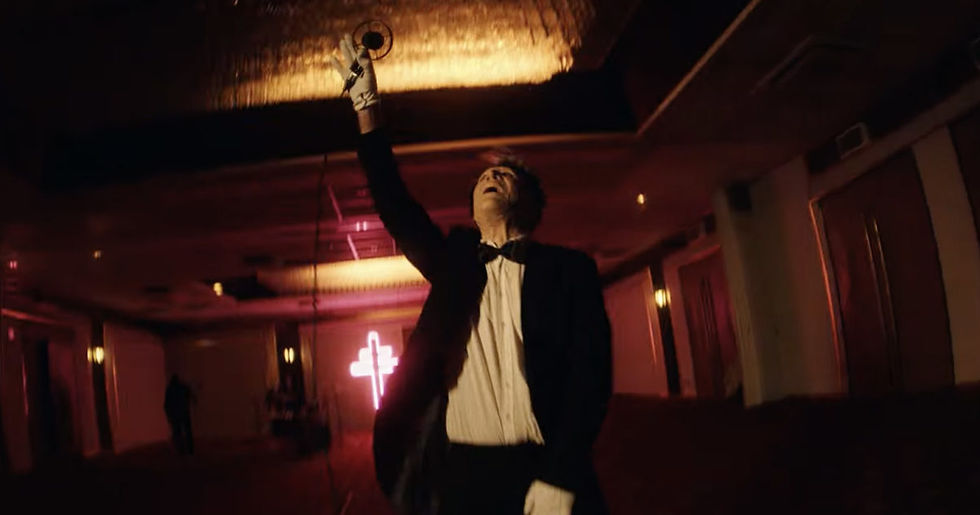
PRESIDENT is not just a band — it’s a concept, an emotional campaign. King of Terrors is their opening address, a declaration that they’re here to dig into the uncomfortable: faith, death, regret, and the fragile self.
Musically, the EP is confident and bold. It doesn’t choose between heaviness and atmosphere, but blends them. Lyrically, it’s earnest and philosophical, never glib in its references to religion or mortality.
As a debut, King of Terrors is staggering in its ambition. It asks big questions, and while it doesn’t always answer them, it paints a richly textured world — one where The President is both the narrator, the pilgrim, and the masked architect.
Verdict: If you lean into theatrical, emotionally resonant heavy music — especially music that feels like more than just songs — King of Terrors is compelling. It’s a strong start for a band that already feels bigger than just a project.


Comments