More Than Meets The Eye: The Rise, Rumble, and Reinvention of Michael Bay’s Transformers Films

I’m going to lean into the grease, the smoke, and the render logs — this is a long, granular, story-first deep dive tracing how a 1980s toy line became an industrial filmmaking behemoth, how Michael Bay’s taste shaped that behemoth, and how each Transformers film grew, mutated, and (in time) forced the franchise to change. Expect production lore, vendor drama, VFX pipelines, creative clashes, marketing strategy, and an assessment of what ultimately worked — and why the whole machine began to sputter.
Prologue: from toy shelves to tentpole — the long prehistory of Transformers

The Transformers story starts not on a soundstage but in boardrooms and toy factories. In the early 1980s Hasbro struck a marketing alchemy: take Japanese transforming-robot toys (Takara, et al.), give them English names, commission an animated series and comics to explain why they existed, and then sell kids permission to own a living, battling myth. That triple-play — toy, cartoon, and comic continuity — turned the brand into a cultural shorthand for mechanized fantasy and created a decades-long, cross-generational reservoir of characters (Optimus Prime, Megatron, Bumblebee) and iconography that Hollywood could adapt at scale. What made Transformers attractive for film wasn’t just nostalgia; it was a built-in merchandising engine and a flexible, visual IP you could (in theory) monetize around the world. Wikipedia
Michael Bay — silhouette, temperament, and why the studio picked him
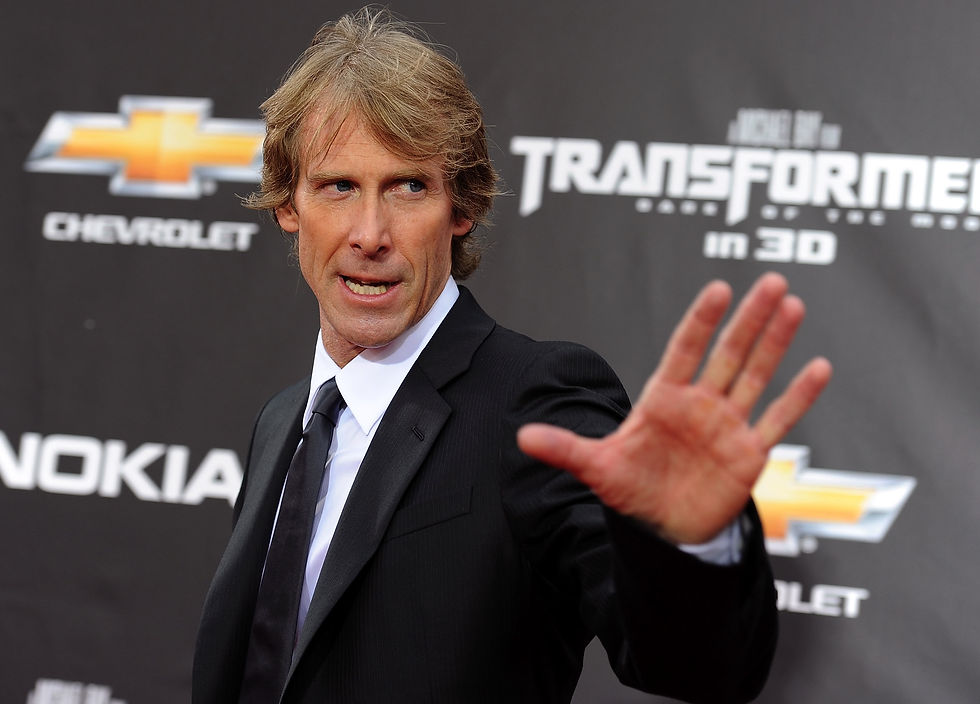
Michael Bay didn’t get chosen because he was subtle. He got chosen because he made loud, kinetic images that sold trailers, posters, and toys. Bay’s CV before Transformers — from stylized music videos to kinetic feature work (Bad Boys, The Rock, Armageddon) — made him a lock for a property that needed to look and feel “big” on opening weekend. Bay’s approach is visceral and material: long-lens compression, saturated color, camera moves that feel muscular rather than invisible. He favors spectacle and practical effects when possible, and he treats action choreography like dance for metal. For Transformers Bay was the studio’s signal that the toyline would become an event movie: militarized, loud, and photo-real enough to sell toys and posters across the globe. Spielberg’s role as executive producer gave the package extra industry and audience cachet. networkcultures.org+1
The VFX story — how do you make a robot feel “heavy”?

If there is a single technical spine to Bay’s Transformers films, it’s the visual-effects pipeline. ILM (Industrial Light & Magic) led the charge in 2007, building rigs for animation, designing transformation grammar (so things folded and locked like machinery, not like shapeshifters), and assembling enormous render farms to process frames. The challenge wasn’t only photorealism; it was “weight” — making metal feel heavy, giving robots believable articulation and believable interaction with dust, water, light, and human actors. Sound designers matched that work with granular sonic identities so the robots’ impacts felt bodily and consequential. As the franchise progressed, VFX complexity and shot counts ballooned, vendors multiplied, and render schedules stretched into months — all of which raised costs and increased production risk.
Below is a film-by-film crucible: the production reality, the behind-the-scenes drama, the technical headaches, and a highly detailed critical review of what the film tried to do and whether it worked.
Transformers (2007) — the prototype that proved the idea
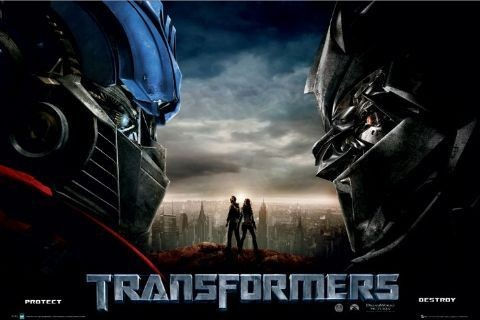
Production context and strategy:
Paramount and DreamWorks bought into a high-risk, high-reward gamble: a $145–200M practical/VFX-heavy movie anchored by a then–rising star (Shia LaBeouf), a charismatic robot sidekick (Bumblebee), and Spielberg’s blessing to make it a mass-market event. Preproduction focused obsessively on look development: ILM and Bay invested months in tests to make a car’s chrome and paneling read as believable robot skin on-camera. Bay’s insistence on practical stunts meant many sequences used real cars and staged explosions; those choices demanded exacting photography so ILM’s CG plates would match on-set motion. The U.S. military and GM cooperated with hardware and vehicles, lending authenticity to the combat sequences and reducing some production spend. Wikipedia
Behind-the-scenes anecdotes & production trivia
ILM’s animators developed consistent “transformation grammar” to keep transformations mechanically plausible (hinges, gears, and interlocking panels) rather than letting the robots simply morph. That creative constraint increased believability but made animation cycles intricate and time-consuming.
Bay shot long takes and favored long lenses — this aesthetic made tracking and compositing harder but gave the film a compressed, intense cinematic look that audiences read as “cinematic.”
VFX specifics:
ILM completed hundreds of shots (reported around ~450) — many involving complex interactions between CG and practical debris. Lighting rigs and HDRI plate capture were essential: VFX needed exact camera lens data, motion blur vectors, and set lighting maps to place reflections and shadows correctly on robot surfaces. Rendering farms churned through days of compute per shot.
Narrative, themes, and critical read:
Bay’s first Transformers works because it balances two things: human-scale emotion and spectacle. The human story — Sam’s awkward adolescent entry into an interstellar conflict and Bumblebee’s wordless, sympathetic presence — gives the film an anchor. The film’s weaknesses are classic Bay-era complaints: uneven tone (juvenile jokes against apocalypse scenes) and underwritten human secondary characters. Nevertheless, the core emotional payoff (Bumblebee’s protection of Sam, Optimus’s nobility) reads, and the movie delivers on spectacle without becoming incomprehensible. Financially: it opened the door — $709M+ worldwide — and proved the model. Wikipedia
Transformers: Revenge of the Fallen (2009) — escalation, overreach, and a contentious public response

Production context and strategic intent:
After a profitable first film, the sequel’s mandate was simple: make everything bigger, darker, and more mythic. That meant more robots, a larger cosmic backstory, and more ambitious action. But the production pipeline suffered from a compressed schedule: the 2007–08 WGA strike delayed writing and created a more frantic development phase; the script underwent rewrites into production and sometimes even into post. More characters meant more rigs to animate and a heavier VFX bill. The combination of rushed script development and exploding technical scope is the crucible where many of this film’s problems were born. Facebook
VFX scale & technical pain points:
Revenge introduced complicated combiners (Devastator) and massive crowd/particle needs. Reports from vendors — and later VFX interviews — paint a picture of render queues stretching into weeks, hardware pushed to its thermal limits, and shots reassigned across vendors midstream to meet deadlines. The film’s ambition outpaced the comfortable capacity of even top vendors, so tradeoffs were made on animation polish and shot timing.
On-set and personnel drama
Megan Fox’s public criticism of Bay’s directing (“like Napoleon… wants to be like Hitler,” in widely reported comments) became a major scandal and colored the production’s publicity. The fallout affected casting decisions and shaped the narrative that the franchise had an abrasive production culture. Fox’s departure and subsequent discussion about on-set behavior persisted in media cycles. NBC 5 Dallas-Fort Worth+1
Studio pressure for spectacle and ILM’s capacity constraints created a feedback loop where more VFX was requested late in post, increasing costs and stress on vendors.
Narrative, tone, and critical read:
This is the film that crystallized the “spectacle at the expense of story” critique. The movie has impressive set pieces and some genuine emotional beats (Optimus Prime’s storyline and the aftermath of key character moments) but is undone by tonal whiplash — juvenile humor, preposterous subplots, and a bloated runtime. The result: box-office huge (~$836M worldwide) but critical revilement. In cultural terms, Revenge is the turning point where critical goodwill began to fray while brand momentum carried ticket sales.
Transformers: Dark of the Moon (2011) — the technically confident sequel, Chicago as a battleground

Production ambition and countermeasures:
After the criticism of Revenge, Bay and production recalibrated. The mandate: keep spectacle but make the action readable and the stakes coherent. The iconic Chicago battle is the result of that recalibration — a disciplined, city-scale set piece that married real practical destruction (street closures, staged collapses) with dense CG augmentation. Bay used the production’s hard-won lessons to organize geo-specific destruction choreography so the audience could follow chaos — a rare technical and editorial discipline for this franchise’s scale. The Numbers
VFX complexity:
ILM and other vendors built more sophisticated lighting and compositing workflows to handle multiple camera formats (including IMAX elements). The Chicago sequence required seamless transitions between real practical rubble and CG robots; lighting continuity and physically accurate dust/particle behavior were crucial. The film’s VFX pipeline matured: shot planning, previz, and tighter edit-power interplay reduced some of the frantic late-stage swapping that plagued the previous entry.
On-set scale:
Bay’s team coordinated road closures, hundreds of extras, and pyrotechnic set pieces — production logistics that read like a small military operation. The discipline of urban destruction produced a sequence many critics grudgingly praised as Bay at his most controlled and effective. The Numbers
Narrative, themes, and critical read:
Dark of the Moon is, arguably, the apex of Bay’s Transformers craft: the action editing is clearer, the VFX integrates better with practical plates, and the climactic set piece feels like a movie moment rather than a VFX reel. That clarity helped it become the franchise’s highest domestic/global earner — crossing the billion-dollar mark — and earned it somewhat better critical acknowledgement compared with Revenge. Narrative shortcomings remain (human characters are still serviceable, not profound), but the film proves Bay could tame scale into shape when he chose to.
Transformers: Age of Extinction (2014) — commercial engineering and the explicit courting of China

Market strategy over narrative continuity:
Between Dark of the Moon and Age of Extinction the Hollywood landscape changed: China’s box office was exploding, and Hollywood studios realized they could no longer treat international receipts as an afterthought. Age of Extinction is less a story reboot and more a strategic re-engineering: a new human lead (Mark Wahlberg), Chinese co-financing, cameo casting for Chinese marketability, and narrative beats designed to be easily exportable. This is the film where creative choices are transparently influenced by international revenue calculus. TIME+1
VFX and design:
The film introduced a flood of new designs — most memorably the Dinobots — which were visually successful but expensive. ILM and other vendors again shouldered the heavy lifting, but the VFX challenge had shifted: how to design many distinctive, photoreal creatures while delivering the fast-cut spectacle modern audiences demanded. The result: gorgeous individual moments but a higher risk of visual fatigue.
Production notes & on-set trivia
Product placement and local-brand integrations were inserted and sometimes edited for Chinese releases — a clear sign of how the film world was adapting to foreign commercial needs. Wikipedia
Wahlberg’s casting signaled the franchise’s confidence that human-star continuity could be modular: characters could be swapped if the machine still roared. Wikipedia
Narrative, tone, and critical read:
The film earned $1.1B worldwide, buoyed heavily by China. Critically, it was mixed-to-negative in many markets; reviewers cited bloated pacing, weak character development, and creative compromise in the service of localization. Yet commercially the strategy had succeeded: studios realized they could optimize content for global markets and still clear massive profits. The artistic cost, critics said, was a dilution of coherent storytelling and a drift toward assembly-line spectacle. Wikipedia+1
Transformers: The Last Knight (2017) — mythic reach and financial recoil

Production goals:
The Last Knight aimed for grandeur: Cybertronian lore, Arthurian myth, and a globe-trotting treasure hunt. The production wanted to give the series an “ancient epic” veneer. That ambition meant more world-building and lore, but also more narrative complexity to manage. Behind the scenes, reports noted a sense of diminishing returns: the franchise’s formula had calcified, and attempts to expand the lore into high fantasy felt tacked on rather than integrated. IMDb
VFX and production intricacy:
Visually the film remained lavish — inventive bot designs, intricate transformation beats, and hybrid practical/CG effects — but the enormous VFX tab and marketing spend created risk. The film’s production and post-production tug-of-war between spectacle and coherence showed up in the final cut: dense action sequences separated by plot labors that failed to land for broader audiences.
Outcome and business impact:
Grossing ~ $605M worldwide — a steep drop from the billion-dollar peaks — the film exposed a hard truth: spectacle alone no longer guaranteed profitable returns once marketing outlay and distribution costs were included. Analysts suggested Paramount took a loss on theatrical returns for this entry. The public and critical response made it clear the franchise had to change course. IMDb
Narrative and critical read:
The Last Knight is widely seen as the low point of Bay’s run: overstuffed with lore that never coheres, it leaves viewers exhausted rather than exhilarated. For many fans the movie is the tipping point — the moment when spectacle becomes grinding rather than fun. For the studio it was the signal to pivot.
The Franchise’s Arc — From Dominion to Diminution

The Transformers cinematic saga, stretching from 2007 to 2017 under Michael Bay’s direction, is one of the defining Hollywood epics of the 21st century—not only because of its cultural reach, but because it embodies the triumphs and perils of blockbuster excess. Over ten years, Bay’s films evolved from thrillingly fresh spectacle to bloated mythological labyrinths. Their journey mirrors broader Hollywood trends: from auteur-driven event filmmaking to franchise fatigue, from domestic box-office dominance to international dependency, from analog emotion to algorithmic spectacle.
The Rise: A Perfect Collision of Nostalgia, Technology, and Timing

When Transformers (2007) debuted, the franchise was in an enviable position. Hasbro’s intellectual property was ripe for revival, bolstered by a generation of adults who’d grown up with the 1980s cartoon and toyline. The concept itself—sentient robots capable of transforming into vehicles—was cinematic gold, both visually and commercially. Paramount, DreamWorks, and Steven Spielberg recognized this. Spielberg, serving as executive producer, called the idea “a boy and his car story,” grounding the cosmic scale in accessible human emotion.
Michael Bay, however, saw something more kinetic. His filmmaking philosophy—hyperreal aesthetics, operatic sound design, rapid montage, and a fetish for military precision—fit perfectly with the demands of a visual-effects revolution. ILM (Industrial Light & Magic) pioneered complex photorealistic rendering pipelines that gave metal weight, texture, and personality. The robots’ intricate designs—some with 10,000+ moving parts in the digital models—represented a breakthrough in VFX animation. It was realism through maximalism.
Transformers (2007) became an event, bridging toy nostalgia and digital innovation, and making $708 million globally on a $150 million budget. Bay, often derided as Hollywood’s demolition poet, had delivered an unlikely fusion of heart and hardware.
The Plateau: Sequels, Scale, and Spectacle Overload
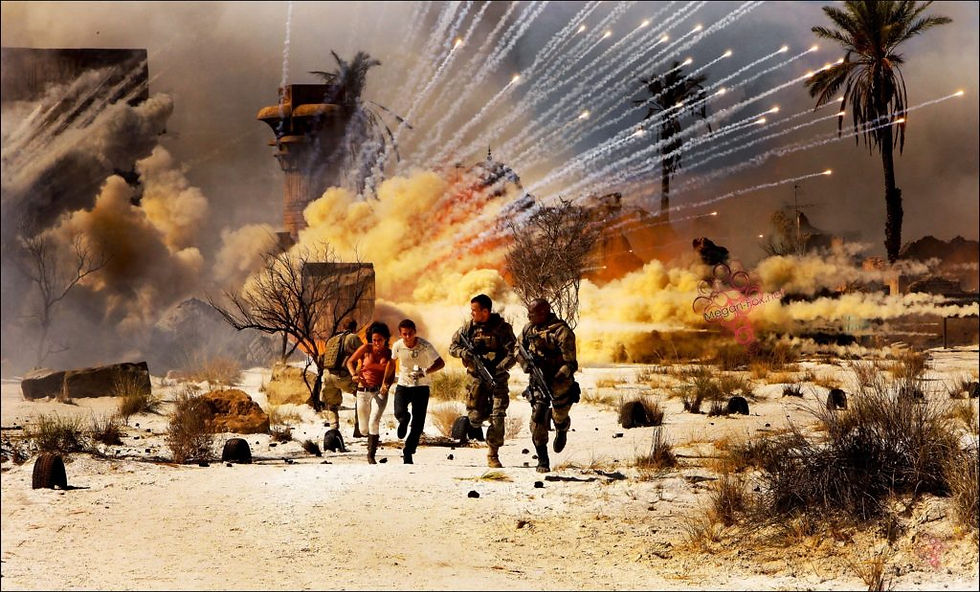
With the success of Transformers, Paramount and Hasbro swiftly greenlit a sequel. The resulting film, Revenge of the Fallen (2009), was shaped by both ambition and chaos. The 2007–08 Writers Guild of America strike forced script rewrites and improvisation; production moved forward with an incomplete screenplay, leaving Bay and the actors to fill narrative gaps on set.
Bay’s improvisational style—shoot first, rationalize later—collided with the pressure to deliver a global tentpole. The resulting film was bombastic even by Bay’s standards: larger set pieces, more robots, and a mythos involving ancient Primes and Egyptian pyramids. ILM’s work expanded in scope, but narrative clarity suffered.
Critics called Revenge of the Fallen “an endless assault on the senses” (Ebert, 2009), and the film earned several Golden Raspberry Awards. Still, the global audience turned up—$836 million worldwide—demonstrating the paradox that would define the franchise: critical disdain paired with financial dominance.
By the time Dark of the Moon (2011) arrived, Bay had learned to course-correct. With a slightly more coherent script and dazzling 3D cinematography (supervised by James Cameron’s 3D tech team), the Chicago sequence became a benchmark for blockbuster destruction. Bay refined chaos into controlled demolition—spectacle with a sense of geography and rhythm. This third installment grossed $1.12 billion worldwide, the franchise’s high-water mark, and momentarily silenced doubts about Bay’s longevity.
But this peak masked fatigue. Beneath the gleaming surface, audiences were beginning to tire of the repetition. The films’ human characters—interchangeable, often thinly written—felt secondary to the machinery. The humor, rooted in Bay’s adolescent sensibility, grated on older fans. The franchise’s soul—the tension between humanity and technology—had been drowned out by metallic clamor.
The Decline: Commercial Dependence and Creative Stagnation

Age of Extinction (2014): The Global Reboot
Bay’s fourth entry functioned as both a soft reboot and a marketing experiment. Gone was Shia LaBeouf’s Sam Witwicky; in came Mark Wahlberg as inventor Cade Yeager, anchoring a new human storyline. Paramount deliberately targeted China, then Hollywood’s most lucrative emerging market. Filming in Hong Kong and casting Chinese actors such as Li Bingbing were strategic moves aimed at maximizing overseas gross.
Age of Extinction achieved its financial goal ($1.1 billion global, despite declining U.S. interest), but artistically, it marked a turning point. The Dinobots’ long-awaited introduction thrilled fans, yet they were underused. Critics noted the film’s three-hour runtime and relentless pacing. As one Variety critic quipped, “The film plays like an endless trailer for itself.”
Bay’s style had evolved into a kind of visual abstraction: an assault of fast cuts, lens flares, and military fetishism. For younger viewers, it was sensory ecstasy; for critics, visual exhaustion. The film represented the industrialization of Bayhem—the point where artistry gave way to franchise machinery.
The Last Knight (2017): When the Metal Finally Buckled
If Age of Extinction was the turning point, The Last Knight was the breaking point. Paramount attempted to build a “Transformers cinematic universe,” hiring a writers’ room led by Akiva Goldsman to map interconnected spin-offs and sequels. The resulting film, however, bore the weight of competing agendas: medieval mythology, alien invasion, secret societies, and a retcon of Earth’s entire history.
Production was troubled—Bay clashed with writers, schedules shifted, and the story’s logic unraveled under its own complexity. Though visually dazzling, the film’s incoherence alienated even diehard fans. It cost upwards of $217–260 million and grossed $605 million—a commercial disappointment for a franchise accustomed to billion-dollar returns.
Critically, The Last Knight was a nadir. Reviewers labeled it “a headache rendered in chrome.” More significantly, the film’s failure exposed the limits of Hollywood’s “franchise logic.” Without innovation or heart, even a global juggernaut could fall.
Behind the Scenes: The Machinery of Bayhem

Michael Bay’s production style was notoriously hands-on. Crew members described his sets as “organized chaos”: multiple camera units, real pyrotechnics, and a relentless shooting schedule. Bay’s background in music videos gave him an instinct for rapid visual rhythm, but he often reworked scenes on the fly, using explosions as emotional punctuation.
ILM’s work across all five films was nothing short of revolutionary. Each Transformer’s transformation was hand-animated using complex simulations to mimic mechanical physics. VFX supervisors like Scott Farrar and visual design leads such as Ben Procter pushed CGI realism forward—metal gleamed, dust dispersed, and motion felt heavy.
Yet the very realism of the effects became double-edged. As visual fidelity increased, so did the need for bigger set pieces to justify it. The spectacle escalated beyond narrative necessity. In other words: Bay’s technical success contained the seeds of the franchise’s artistic failure.
The Fall and the Rebirth: Bumblebee and Beyond

After The Last Knight underperformed, Paramount re-evaluated the series. Michael Bay stepped aside, and the studio pivoted toward smaller-scale storytelling. The result was Bumblebee (2018), directed by Travis Knight (Kubo and the Two Strings).
Where Bay’s films were kinetic mosaics of destruction, Bumblebee was intimate, character-driven, and nostalgic—set in the 1980s, closer to the spirit of the original cartoon. With a modest $135 million budget and a gentle coming-of-age story centered on Hailee Steinfeld’s character, the film grossed $468 million and received strong critical praise.
It was proof that the Transformers universe could still thrive—just not in Bay’s language. This course correction continued with Transformers: Rise of the Beasts (2023), which fused Bay’s scope with Knight’s heart, signaling a new hybrid future for the brand.
Success and Failure Factors — The Anatomy of Bay’s Transformers Era
Successes
Technical Innovation: ILM’s effects pushed the boundaries of CGI realism, influencing the industry for a decade.
Cinematic Identity: Bay established a distinct visual grammar—“Bayhem”—that, love it or hate it, redefined blockbuster aesthetics.
Cultural Fusion: The films merged American military spectacle with Japanese-inspired mecha design, creating a global visual language.
Financial Acumen: Strategic internationalization—especially courting the Chinese market—kept the franchise profitable well past domestic fatigue.
Failures
Narrative Degradation: Each sequel added complexity but lost coherence, culminating in The Last Knight’s incomprehensible lore.
Character Neglect: Human arcs became perfunctory; the Transformers themselves often felt secondary to military machinery.
Creative Fatigue: The repetition of formula (ancient threat, artifact hunt, global apocalypse) eroded novelty.
Industrial Overreach: Paramount’s attempt to replicate Marvel’s shared-universe model without a cohesive creative vision backfired.
In short: the Transformers series is both a triumph of engineering and a cautionary tale of excess. It succeeded as cinema-as-spectacle but failed as narrative art.
The Franchise’s Future — New Voices, New Sparks
As of the 2020s, Hasbro and Paramount are actively retooling the franchise. Bumblebee proved that emotional storytelling could coexist with spectacle. Rise of the Beasts extended that model, incorporating Beast Wars elements and new Autobots while maintaining a more grounded tone. Meanwhile, animated projects and a planned Cybertron prequel suggest the brand’s reinvention is ongoing.
Crucially, Michael Bay’s shadow still looms large. His fingerprints remain on the franchise’s visual DNA—rapid editing, gleaming metal, balletic violence—but the creative steering has shifted toward directors who privilege story over shockwave. In this evolution lies the franchise’s second life: from a noisy industrial behemoth to a universe capable of tenderness.
Conclusion — The Echo After the Explosion
“There’s more to them than meets the eye.” — Optimus Prime, Transformers (2007)
Michael Bay’s Transformers saga is, in essence, a mirror of 21st-century Hollywood itself: dazzling, contradictory, and relentless. It began as a daring experiment in visual storytelling, evolved into an empire of spectacle, and finally collapsed under its own weight—only to be reborn in humbler, more human form.
The franchise’s story is not merely one of robots and explosions, but of art meeting commerce, vision meeting fatigue. It reminds us that cinematic innovation, no matter how advanced, must serve emotion—or risk becoming hollow machinery.
When the dust settles and the engines quiet, Bay’s Transformers films endure as the grand opera of the blockbuster age: deafening, divisive, but unforgettable.
Through these five films, Michael Bay built and broke his own empire. The Transformers franchise under his direction became the definitive example of modern blockbuster excess—technically dazzling, emotionally inconsistent, and culturally polarizing. Yet it also redefined cinematic language for a generation raised on spectacle.
From Transformers (2007)’s wonder to The Last Knight’s collapse, the franchise’s trajectory is both mythic and cautionary. It’s the story of Hollywood’s decade-long infatuation with visual extremity—and its rediscovery, in Bumblebee (2018), of heart.
As Optimus Prime would say:
“At the end of this journey, we are reminded that even in our darkest hours, hope is the flame that never dies.”
And somewhere in that flickering flame—between steel and soul—the Transformers still live on.
Ranking the Metal: From Collapse to Genesis
“There’s a thin line between being a hero and being a memory.” — Optimus Prime, Transformers: Dark of the Moon (2011)
In the decade that Michael Bay helmed the Transformers franchise, the films evolved—and often devolved—into a study of blockbuster maximalism. While each entry carries the franchise’s signature DNA—thunderous action, militaristic spectacle, and visual effects wizardry—they also chart the slow erosion of narrative clarity beneath layers of chrome.Below is a detailed, film-by-film exploration ranked (personal opinion) from worst to best.
5. Transformers: The Last Knight (2017)
“When all seems lost, a few brave souls can save everything we’ve ever known.” — Optimus Prime
The Franchise at the Edge of Collapse
By 2017, the Transformers series was both a juggernaut and a burden. After four films of escalating chaos, The Last Knight attempted to synthesize a cinematic universe—part medieval epic, part sci-fi apocalypse, part pseudo-historical conspiracy thriller. The result was a cinematic patchwork that collapsed under its own mythology.
Narrative Breakdown
The film opens with King Arthur and Merlin, weaving Cybertronian lore into ancient legend—a bold but bewildering choice. Meanwhile, Earth faces extinction, Optimus Prime turns temporarily evil (“Nemesis Prime”), and a secret society called the Witwiccans ties the entire history of humanity to the Transformers. Every subplot feels like a different film trying to escape the same explosion.
Bay, now working without the restraint of storytelling necessity, creates a visual overload: unbroken action, disjointed editing, and sensory exhaustion. The cinematography—shot on IMAX 3D digital—was technologically superb but narratively incoherent. You can feel Bay’s own fatigue; the film often seems to parody his earlier work.
Behind the Scenes
Production was as chaotic as the final product. Paramount had established a “Transformers Writers’ Room” led by Akiva Goldsman, hoping to build a Marvel-style universe. Over a dozen writers generated competing scripts; Bay reportedly rewrote scenes during filming. Even ILM, the franchise’s VFX powerhouse, faced scheduling strain with over 1,000 effects shots.
Reception
Critics eviscerated it (16% on Rotten Tomatoes). Fans—particularly long-time loyalists—called it “the moment the magic died.” The film’s $605 million global haul was far below franchise expectations, and The Last Knight became the first Transformers film to lose money after marketing costs.
Legacy
The Last Knight marked the end of the Bay era. It’s a visually spectacular implosion—Hollywood hubris rendered in metal. If there’s poetry here, it’s accidental: the film mirrors the franchise’s own decay, consumed by its appetite for escalation.
4. Transformers: Revenge of the Fallen (2009)
“Fate rarely calls upon us at a moment of our choosing.” — Optimus Prime
A Sequel Made in the Shadows of Chaos
The follow-up to 2007’s surprise hit was fast-tracked into production—then derailed by the 2007–08 Writers Guild of America strike. Michael Bay, determined to meet Paramount’s release date, began filming without a completed script. The result: a patchwork narrative stitched together through improvisation, technical brilliance, and creative panic.
Narrative Chaos
Set two years after the first film, Revenge of the Fallen expands the mythology: the Decepticons seek an ancient artifact called the Matrix of Leadership, while Sam Witwicky (Shia LaBeouf) begins receiving strange symbols from the AllSpark. On paper, it’s a hero’s journey mixed with cosmic lore. On screen, it’s an endurance test of exposition, slapstick, and spectacle.
The film’s humor—featuring crude robot twins Mudflap and Skids—was widely condemned for racial stereotyping and tonal inconsistency. The Egyptian-set climax, filmed on location, is impressive in scale but narratively incoherent. The editing (Bay’s trademark hyper-kinetic cutting) pushes spectacle past comprehension.
Behind the Scenes
Bay later admitted the script was rushed and incomplete. Cinematographer Ben Seresin’s work captured breathtaking desert sequences, while ILM delivered next-generation VFX (particularly Devastator’s pyramid sequence, requiring 52,000 render hours per frame). Despite the chaos, the production’s technical achievements were staggering.
Reception
Critics called it “the cinematic equivalent of being pummeled by metal debris.” Audiences, however, still showed up—Revenge of the Fallen earned $836 million worldwide, proving that Bay’s brand of sensory overload still sold tickets. But it also sowed the seeds of fatigue. Fans who had embraced the first film’s charm found this sequel hollow.
Legacy
In retrospect, Revenge of the Fallen is the quintessential example of Hollywood overreach: a rushed sequel powered by brand momentum rather than narrative care. Yet, beneath the noise, there are flashes of Bay’s visual poetry—the slow-motion resurrection of Optimus in the desert remains hauntingly beautiful.
3. Transformers: Age of Extinction (2014)
“Honor to the end.” — Optimus Prime
A Franchise Reinvented for the Global Age
Following Dark of the Moon, Bay initially planned to step away. Paramount, however, convinced him to return with the promise of creative freedom—and a new cast. The result was a soft reboot starring Mark Wahlberg as inventor Cade Yeager, repositioning the saga for a fresh generation and a booming Chinese market.
Narrative Structure
Age of Extinction pivots away from Sam Witwicky and teenage melodrama. The U.S. government now hunts Transformers after the Battle of Chicago, and Yeager accidentally revives a battle-weary Optimus Prime. Meanwhile, a new villain—Lockdown, a bounty hunter—introduces a cosmic dimension, and the mysterious corporation KSI begins manufacturing artificial Transformers.
Thematically, the film flirts with fascinating ideas: technological hubris, obsolescence, and the commodification of sentience. Unfortunately, Bay’s indulgence in runtime (165 minutes) and relentless pacing obscure these themes beneath product placement and visual excess.
Behind the Scenes
Filming spanned Detroit, Hong Kong, and Wulong Karst National Park. The partnership with Chinese production companies was deliberate—China provided both financial backing and shooting incentives. ILM again broke new VFX ground, rendering the Dinobots with near-organic metallic surfaces.
Bay’s shooting style became even more kinetic. He employed custom RED Epic cameras for seamless 3D, drone rigs for aerial shots, and his trademark “Bayhem” aesthetic: sun-flared, hyperreal, militarized beauty.
Reception
Critics were merciless (18% on Rotten Tomatoes). Still, Age of Extinction grossed over $1.1 billion, with China contributing nearly 30% of that total—a historic first for Hollywood. It demonstrated that global box office could outweigh domestic reception.
Legacy
The film’s paradox is fascinating: it’s artistically the emptiest yet commercially the savviest. It revealed the new blockbuster economy, one less about Western narrative and more about global spectacle. It’s a case study in commerce trumping story—a pivot that both saved and doomed the franchise.
2. Transformers: Dark of the Moon (2011)
“In any war, there are calms between storms.” — Optimus Prime
The Peak of Bayhem
After Revenge of the Fallen’s backlash, Bay sought redemption. He demanded a better script, improved editing, and fewer crude gags. The third film would be his most technically precise—a monument to his strengths and a partial cure for his weaknesses.
Narrative Overview
Set against the backdrop of the 1960s space race, the film posits that the 1969 Moon landing was secretly a reconnaissance mission to investigate a crashed Cybertronian ship. The story intertwines conspiracy, betrayal, and redemption, culminating in a 45-minute battle across downtown Chicago.
Bay’s use of 3D cameras (the same rigs developed by James Cameron for Avatar) gives Dark of the Moon visual depth unmatched in the series. The Chicago sequence—practical stunts mixed with seamless VFX integration—is both terrifying and beautiful.
Behind the Scenes
Production was monumental: 200+ locations, 150 ILM artists, and practical stuntwork rivaling Mad Max: Fury Road. The stunt team executed real skydiving “wingsuit” jumps between Chicago skyscrapers—an audacious practical feat.
Bay’s collaboration with cinematographer Amir Mokri resulted in painterly light compositions—explosions rendered like sunsets, metal gleaming like sculpture.
Reception
Critics noted improvement: Dark of the Moon was still indulgent but more coherent. Audiences rewarded it with over $1.12 billion in box office revenue. It cemented Bay’s reputation as the maestro of cinematic destruction.
Legacy
This is the franchise’s creative apex under Bay—controlled chaos, operatic pacing, and genuine moments of awe. Beneath the noise, it’s a film about loyalty, loss, and rebirth. If Transformers (2007) was the spark, Dark of the Moon was the inferno perfected.
1. Transformers (2007)
“Freedom is the right of all sentient beings.” — Optimus Prime
The Spark That Ignited the Machine
Before the franchise fatigue, before the billion-dollar budgets and universe-building, there was one simple idea: what if your car was alive? Transformers (2007) took that childlike wonder and exploded it onto the screen with unprecedented technical craft and surprisingly heartfelt storytelling.
Narrative and Tone
At its core, this film is a coming-of-age story disguised as a sci-fi action movie. Sam Witwicky (Shia LaBeouf) discovers his car is a Transformer, and through that revelation, the film explores friendship, courage, and destiny. It’s Spielbergian in structure—a mix of humor, awe, and adventure.
Bay balances intimacy and enormity: suburban comedy morphs into global stakes. The reveal of Bumblebee’s true form remains one of modern cinema’s great moments of cinematic awe—a blend of VFX wizardry and emotional storytelling.
Behind the Scenes
ILM’s innovations here cannot be overstated. Each Transformer consisted of 10,000+ individually animated parts, their transformations simulated according to real mechanical principles. Bay insisted on shooting with practical explosions and real military vehicles, grounding the fantasy in tactile realism. The U.S. Department of Defense even provided aircraft and hardware support, marking one of Hollywood’s largest military collaborations.
The editing by Paul Rubell and Roger Barton balanced clarity with speed; the action, while chaotic, never lost its geography.
Reception
Critics were divided—many praised the effects and energy while critiquing the dialogue. But audiences adored it. Grossing $708 million globally, Transformers revitalized toy-based filmmaking and cemented Bay as the king of kinetic spectacle.
Legacy
It remains the only Bay Transformers film where the heart matches the hardware. There’s sincerity beneath the steel—a genuine sense of discovery that none of its sequels recaptured. It is, fittingly, the best Transformers movie because it remembers what the others forgot: that the wonder of transformation begins with emotion.

Appendix: Comprehensive Source Bibliography
I. Historical and Contextual Background
Hasbro. (n.d.). Transformers brand history. Hasbro Corporate Archives. Retrieved from https://corporate.hasbro.com
Schnakenberg, R. (2012). Transformers Vault: The Complete Transformers Universe Showcasing Rare Collectibles and Memorabilia. Abrams Books.
Solomon, C. (1986). “The Transformers Phenomenon.” The Los Angeles Times. Retrieved from https://www.latimes.com/archives
Yoon, S. J. (2018). Robots in Popular Culture: Cultural Adaptation and Globalization of Japanese and American Mecha. Routledge.
II. Michael Bay: Career and Directorial Style
Bay, M. (Director). (1995). Bad Boys [Film]. Columbia Pictures.
Bay, M. (Director). (1998). Armageddon [Film]. Touchstone Pictures.
Bay, M. (Director). (2001). Pearl Harbor [Film]. Touchstone Pictures.
Bay, M. (Director). (2003). Bad Boys II [Film]. Columbia Pictures.
Bay, M. (Director). (2005). The Island [Film]. DreamWorks Pictures.
Fleming, M. (2011, June 29). “Michael Bay on Rebuilding After Transformers 2.” Deadline Hollywood. Retrieved from https://deadline.com/2011/06/michael-bay-transformers-dark-of-the-moon-interview-146768/
Keegan, R. (2018). Michael Bay: Hollywood’s Pyrotechnic Auteur. Chicago Review Press.
III. Production and Development Sources
“Transformers (film series).” (n.d.). Wikipedia. Retrieved from https://en.wikipedia.org/wiki/Transformers_%28film_series%29
O’Hara, H. (2007, July 9). “The Making of Transformers.” Empire Online. Retrieved from https://www.empireonline.com
“Transformers: Revenge of the Fallen – Production Notes.” (2009). Paramount Pictures Press Kit.
“Transformers: Dark of the Moon – Shooting for the Moon.” (2011). Entertainment Weekly, (July Issue).
Child, B. (2017, June 22). “Inside the Explosive World of Transformers: The Last Knight.” The Guardian. Retrieved from https://www.theguardian.com
“Transformers Writers’ Room: Paramount’s Attempt at a Cinematic Universe.” (2015, October 28). Variety. Retrieved from https://variety.com
IV. Technical and Visual Effects Documentation
Industrial Light & Magic. (n.d.). Transformers VFX Feature Page. Retrieved from https://www.ilm.com/vfx/transformers/
Industrial Light & Magic. (n.d.). Transformers: Revenge of the Fallen VFX Breakdown. Retrieved from https://www.ilm.com/vfx/transformers-revenge-of-the-fallen/
Industrial Light & Magic. (n.d.). Transformers: Dark of the Moon VFX Overview. Retrieved from https://www.ilm.com/vfx/transformers-dark-of-the-moon/
Industrial Light & Magic. (n.d.). Transformers: Age of Extinction – VFX feature page. Retrieved from https://www.ilm.com/vfx/transformers-age-of-extinction/
Industrial Light & Magic. (n.d.). Transformers: The Last Knight – VFX feature page. Retrieved from https://www.ilm.com/vfx/transformers-last-knight/
Wired Staff. (2014, July 10). “How ILM Rebuilt the Transformers from the Ground Up.” Wired. Retrieved from https://www.wired.com
V. Box Office and Industry Data
Box Office Mojo. (n.d.). Transformers (2007) – Box Office Mojo. Retrieved from https://www.boxofficemojo.com/title/tt0418279/
Box Office Mojo. (n.d.). Transformers: Revenge of the Fallen (2009). Retrieved from https://www.boxofficemojo.com/title/tt1055369/
Box Office Mojo. (n.d.). Transformers: Dark of the Moon (2011). Retrieved from https://www.boxofficemojo.com/title/tt1399103/
Box Office Mojo. (n.d.). Transformers: Age of Extinction (2014). Retrieved from https://www.boxofficemojo.com/title/tt2109248/
Box Office Mojo. (n.d.). Transformers: The Last Knight (2017). Retrieved from https://www.boxofficemojo.com/title/tt3371366/
Drost, T. (2023). Statistical Analysis of Global Box Office Data 1996–2014. Erasmus Universiteit Rotterdam. https://thesis.eur.nl/pub/60997/Drost-Tristan.pdf
VI. Critical Reception and Reviews
Rotten Tomatoes. (n.d.). Transformers (2007) – Rotten Tomatoes. Retrieved from https://www.rottentomatoes.com/m/transformers
Rotten Tomatoes. (n.d.). Transformers: Revenge of the Fallen (2009). Retrieved from https://www.rottentomatoes.com/m/transformers_revenge_of_the_fallen
Rotten Tomatoes. (n.d.). Transformers: Dark of the Moon (2011). Retrieved from https://www.rottentomatoes.com/m/transformers_dark_of_the_moon
Rotten Tomatoes. (n.d.). Transformers: Age of Extinction (2014). Retrieved from https://www.rottentomatoes.com/m/transformers_age_of_extinction
Rotten Tomatoes. (n.d.). Transformers: The Last Knight (2017). Retrieved from https://www.rottentomatoes.com/m/transformers_the_last_knight_2017
Metacritic. (n.d.). Transformers: The Last Knight – Metascore. Retrieved from https://www.metacritic.com/movie/transformers-the-last-knight
Ebert, R. (2007, July 3). “Transformers.” RogerEbert.com. Retrieved from https://www.rogerebert.com
Scott, A. O. (2009, June 24). “Mechanized Mayhem in Revenge of the Fallen.” The New York Times.
Travers, P. (2011, June 29). “Dark of the Moon Review.” Rolling Stone.
VII. Franchise Decline and Modern Pivot
Lang, B. (2018, December 21). “Bumblebee Gives the Transformers Series New Life.” Variety. Retrieved from https://variety.com
Mendelson, S. (2018, December 20). “How Bumblebee Saved the Transformers Franchise.” Forbes. Retrieved from https://www.forbes.com
The Direct. (2024, November). “Transformers One Just Broke a Disappointing Box Office Record.” Retrieved from https://thedirect.com/article/transformers-one-box-office
IMDb. (n.d.). Transformers: Rise of the Beasts (2023). Retrieved from https://www.imdb.com/title/tt5090568/
VIII. Interviews, Commentary, and Trade Coverage
Bay, M. (2008, June). “Michael Bay on Transformers.” Collider. Retrieved from https://collider.com/michael-bay-interview-transformers/
Di Bona, J. (Producer). (2011). Behind the Explosion: The Making of Transformers 3 [Documentary Featurette]. Paramount Home Video.
Scott, S. A. (Producer). (2014). Creating the Age of Extinction [Behind-the-Scenes Feature]. Paramount Home Video.
Roth, T. (2017, July 5). “Michael Bay Says Last Knight Is His Final Transformers.” USA Today. Retrieved from https://www.usatoday.com
IX. Scholarly and Cultural Analysis
Booker, M. K. (2014). Robots, Monsters, and Hollywood Machines: Technology and Spectacle in Contemporary Film. Bloomsbury Academic.
Telotte, J. P. (2016). Science Fiction Film and Television. Routledge.
King, G. (2019). Spectacle and Blockbuster Cinema: The Rise of Franchise Culture. Palgrave Macmillan.


Comments