Lock In, Mark Out: How Deadlock Pro Wrestling Suplexed Its Way From Podcast Gags to Indie Glory
A love letter to a promotion that started with memes and ended up changing the indie game.
1. From Podcast Mics to Powerbombs
How three wrestling nerds turned inside jokes into body slams
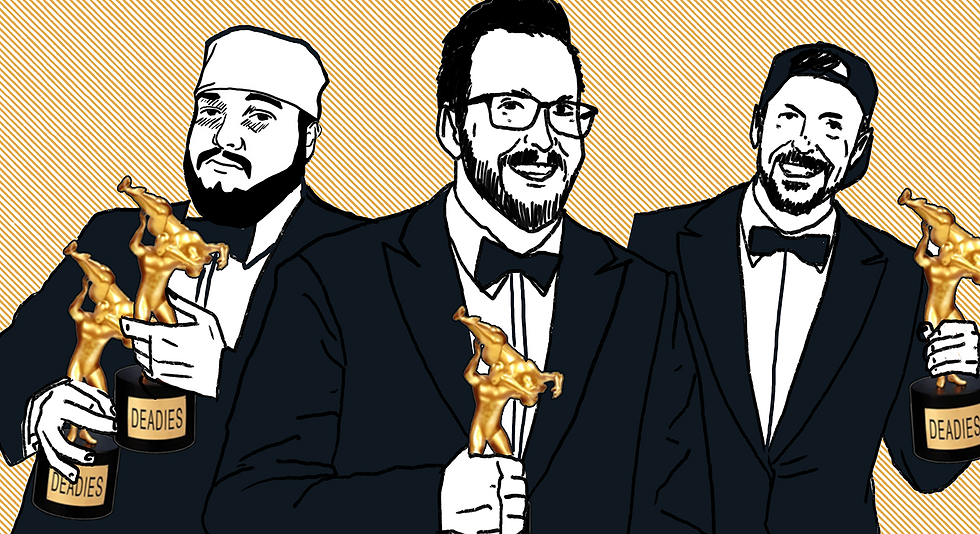
To understand Deadlock Pro Wrestling, you have to start where all great internet movements begin: a Discord call full of laughter, caffeine, and questionable ideas.
It all started with three friends — James Darnell (Pulse), Anthony Douglas (TonyPizzaGuy), and John Blud — whose love for wrestling was only matched by their ability to make fun of it. These weren’t suits in boardrooms or wrestling lifers with dusty notebooks full of failed gimmicks. These were fans. Lifelong ones. The kind who watched every old ECW show, who debated whether 2003 SmackDown was peak storytelling, and who could quote a Kevin Nash promo like scripture.
Their creation, the DEADLOCK Podcast, launched in 2019 and quickly became the destination for wrestling fans who loved the absurd just as much as the athletic. Imagine if Mystery Science Theater 3000 watched wrestling instead of bad movies — that’s Deadlock.
Episodes were filled with inside jokes (“He’s just a boy!”), ironic deep dives (“Let’s rewatch 2000s TNA for science”), and genuine passion. They’d dissect why Jeff Jarrett was both the best and worst thing to ever happen to humanity, or why someone like Billy Kidman should be studied by NASA for defying physics.
And through all that ridiculousness, an idea started to brew.
At first, it was a joke. Someone — probably mid-laugh — said,
“Man, if we ran our own show, it’d be the greatest thing ever.”
A few chuckles later, it became a recurring bit.A few months later, it became a plan.And a few terrifying bank withdrawals later, it became Deadlock Pro Wrestling.
It was the ultimate wrestling fan fantasy: “What if we made a promotion run our way?”
But the best part? They actually pulled it off.
Because here’s the thing — the Deadlock crew weren’t outsiders. They understood wrestling at a DNA level. They grew up on it. They respected it. They’d been part of YouTube’s wrestling renaissance, running popular channels and communities for years.
So when they announced DPW in November 2021, it didn’t feel like a parody or a vanity project. It felt like inevitable destiny. Like the universe had said, “Yeah, these three? They get it.”
And the tone was perfect: equal parts professionalism and chaos.
They promised world-class wrestling.
They promised to showcase talent who deserved the spotlight.
They promised to keep the Deadlock spirit — the memes, the laughs, the irreverence — alive.
Even the branding screamed “authentic.” The red-and-black logo felt bold but familiar, the name “Deadlock” carried weight (and sounded way cooler than 90% of indie promotions), and the early teasers were drenched in that nostalgic-yet-modern vibe.
When the first posters dropped, fans didn’t just ask who’s wrestling — they said, “Wait… they’re actually doing this?”
And they did.
The same voices who’d joked about WCW 2000 and TNA asylum years were now calling matches, producing shows, and running one of the fastest-growing indie promotions in North America.
It was a perfect storm of timing and passion. Wrestling fans were hungry for something that didn’t take itself too seriously but still treated wrestling like the art form it is.
DPW landed right in that sweet spot — the Venn diagram between wrestling nerds, meme culture, and genuine emotion.
By the time the first bell rang, it wasn’t just a podcast project anymore. It was a full-fledged movement — a love letter to wrestling’s past, present, and future.
Because at its heart, Deadlock Pro was never about proving anything to anyone. It was about one simple truth:
Wrestling is supposed to be fun.
And for the next four years, they made sure it was.
2. The First Show: “You Already Know” (Because Of Course That’s the Name)
Where chaos met Carolina and indie wrestling changed forever

By late 2021, the Deadlock Podcast wasn’t just a show anymore — it was a community. Thousands of fans tuned in weekly for the banter, the nostalgia, and the ever-growing list of inside jokes that would later echo in DPW chants. It was only a matter of time before the trio behind it — James (Pulse), John, and Tony — decided to go full send.
But starting a wrestling promotion isn’t as simple as “book a ring, print some shirts, and hit record.” It’s more like “assemble a traveling circus, juggle ten logistics nightmares, and hope your lighting rig doesn’t electrocute anyone.”
And yet, that’s exactly what Deadlock did.
December 11, 2021 — The First Fire Ignites

The debut taping of DPW Fire took place in North Carolina — the perfect home base. Why? Because North Carolina is lowkey sacred ground for wrestling fans. It’s where legends like the Hardys, the Horsemen, and Ricky Steamboat all built their names. It’s wrestling’s barbecue belt — equal parts sweat, history, and sweet tea.
So it’s fitting that this homegrown promotion decided to light its first spark right there.
The setup was humble but passionate: a modest venue packed with fans who got it. You could feel the Deadlock energy from the second the doors opened. Some people came wearing DPW merch. Others wore shirts with obscure podcast references like “HE’S JUST A BOY!” or “HOLY SH*T, BOJACK!”
It wasn’t just an audience — it was a congregation.
Enter: You Already Know

When they announced their first major event for early 2022, the name said everything: You Already Know.
It was peak Deadlock humor — a phrase so confident it was borderline trolling. Like, “Of course you’re watching. We’re awesome.”
But behind that wink was genuine passion. This was their first pay-per-view. Their true coming-out party.
And the card? Absolutely stacked for an upstart indie.
Bojack vs. Andrew Everett for the inaugural DPW Worlds Championship.Bojack — a Carolina powerhouse with the aura of a final boss in a 16-bit brawler — versus Andrew Everett, the “Big Man” who does flips no human his size should logically perform.
Lucky Ali, Colby Corino, Raychell Rose, Calvin Tankman, and others filled out the roster — a who’s who of indie stars and underrated talent looking for a stage that got it.
DPW wasn’t trying to reinvent the wheel. They were just putting good wrestlers in a ring, with smart booking, strong production, and a vibe that screamed “we’re fans too.”
And it worked.
When that bell rang, it was clear this wasn’t a vanity project or a “YouTuber tries wrestling” stunt. It was a real, fully functioning indie fed with serious chops.
Production Like a Dreamcast Cutscene (In a Good Way)
Fans expected a charmingly rough debut. What they got was shockingly polished.DPW’s production team — small but mighty — shot everything like a hybrid between AEW Dark and late-2000s ROH, with slick camera work, great lighting, and commentary that balanced hype with humor.
The DPW ring even looked iconic: red ropes, sleek logos, and a visual identity that screamed, “We belong.”
The show streamed online, reaching fans around the world — many of whom had never attended an indie show before but trusted the Deadlock name.
The comments section during the premiere was pure serotonin:
“How is this their first show??”“Bojack’s a beast!”“This feels like old-school NXT but with memes.”“Wait… this actually rules???”
Bojack Ascends

Then came the main event: Bojack vs. Andrew Everett for the DPW Worlds Championship.
The atmosphere was electric. Everett, with his veteran swagger and high-flying confidence, felt like the natural choice. But Bojack — this massive, stoic figure who looked like he could shoulder press a sedan — was inevitable.
When Bojack hit the final powerbomb and secured the pin, the place erupted. The crowd wasn’t just cheering a victory; they were witnessing a moment. The moment DPW went from “fun experiment” to real deal.
Bojack held the belt high, and the camera panned over a crowd of fans losing their minds. That single image — Bojack in the ring, lights gleaming off the new title, the Deadlock logo behind him — instantly became a defining snapshot of DPW’s identity.
The Internet Comes Alive
Within hours, clips were everywhere: Twitter, Reddit, TikTok. DPW’s fanbase didn’t just consume the product — they spread it.
GIFs of Bojack’s lariat, slow-mo replays of Everett’s moonsault, memes about Pulse’s commentary — it was an online explosion.
The beauty of it all? DPW didn’t need to “find” an audience. They already had one. The same people who tuned in for every Deadlock Podcast episode now had a living, breathing extension of that universe.
And they were invested.
Fans weren’t just watching wrestling — they were watching their community’s dream come true.
It was like if your favorite YouTube channel suddenly launched its own theme park and it didn’t suck.
DPW wasn’t trying to compete with WWE or AEW — they were creating their own lane.And that lane was paved with passion, memes, and pure, unfiltered love for pro wrestling.
As the first show came to a close, the Deadlock team stepped into the ring to thank everyone. It wasn’t polished. It wasn’t rehearsed. But it was real.
James Darnell’s voice cracked mid-speech. The crowd chanted “DEAD-LOCK! DEAD-LOCK!”
And for a moment, it hit everyone there — this wasn’t just a new indie fed. This was something special. Something ours.
The credits rolled. The lights dimmed. And just like that… the fire had caught.
DPW was officially alive.
3. The Glow-Up: From Carolina Indie to Global Crossover
How DPW went from “local show with memes” to “international powerhouse with memes”

If DPW’s debut was the spark, then the next two years were the explosion.
Most indie wrestling promotions spend their early years finding their footing — tinkering with their presentation, figuring out what fans respond to, begging Uncle Larry to lend them his sound system again.DPW, on the other hand, skipped straight to being must-watch TV.
From the moment Bojack hoisted that first DPW Worlds Championship, the message was clear: this wasn’t a novelty promotion. This was the real deal.
“DPW Fire” Ignites Weekly Storytelling

DPW’s Fire series quickly became its heartbeat — episodic YouTube wrestling done right.Not just matches for matches’ sake, but a cohesive world with evolving stories, character arcs, and payoffs that actually landed.
Each episode felt like a polished indie comic issue — familiar faces returning, new challengers debuting, all leading to the next big event. And the Deadlock team, in true content-creator fashion, mastered the pacing.
They understood how to tell stories for the internet age.
Shorter episodes than your typical two-hour indie dump.
Tight editing that made matches pop.
Music, production, and graphics that felt modern but still grassroots.
Commentary that was equal parts passionate and hilarious — the kind of banter that reminded you this company was built by people who still love yelling about wrestling online at 2 a.m.
DPW Fire was wrestling’s answer to the MCU Disney+ formula, but with suplexes and southern accents.
Expansion: “From the Carolinas to Everywhere”
Word of mouth spread like wildfire.
One minute DPW was hosting monthly tapings in Durham, the next they were booking venues across the East Coast. North Carolina fans started showing up hours early. New fans drove in from states away, some rocking DPW shirts like they were band tour merch.
Then, 2023 hit — and DPW went from indie darlings to bona fide international contenders.
DPW Live 1 — The Tour Begins

DPW Live 1 marked the promotion’s first foray beyond home turf.This wasn’t just another local show — this was a statement.
The production quality? Crisp.The matches? Bangers.The vibe? “What if your favorite podcast started its own traveling circus?”
Fans who’d only seen DPW online now got to experience it in person — and it slapped.
Every show felt like a family reunion, complete with memes, merch lines that stretched to the parking lot, and chants that no one else in wrestling could get away with.
And through it all, the Deadlock trio — Pulse, Tony, and John — were everywhere. Meeting fans, producing, doing commentary, still somehow finding time to post a meme about 2006 ECW on Twitter.
It was grassroots wrestling done the right way — passion-driven, community-supported, and funded by fans who actually cared.
DPW x Gatoh Move: The Japan Connection

Then came the moment that made international fans sit up straight: Deadlock Pro Wrestling went to Japan.
In a collaboration with Gatoh Move Pro Wrestling (the home of ChocoPro and the legendary Emi Sakura), DPW made the jump across the Pacific — an almost unheard-of move for a U.S. indie still in its early years.
What could have been a one-off gimmick show turned into something beautiful.
It wasn’t “Americans in Japan.” It was DPW meets Joshi, and it worked perfectly.
Japanese fans, curious about these loud American podcasters-turned-promoters, quickly realized: oh no, these guys actually get it.
The crossover highlighted DPW’s respect for wrestling tradition while keeping their signature irreverent charm. Wrestlers like Miyuki Takase and Miyu Yamashita became household names in DPW circles. Meanwhile, Western fans discovered Gatoh Move’s vibrant, character-driven style.
It was a cultural exchange done the Deadlock way —heartfelt, chaotic, and unironically respectful.
The Indie Alliance: Prestige, West Coast Pro, and Beyond

By 2024, DPW wasn’t just surviving — it was thriving.
While other small promotions fought for scraps, Deadlock was forging alliances.They teamed up with Prestige Wrestling, West Coast Pro, and other top-tier indies to create dream matchups that made fans double-check the posters to make sure they weren’t photoshopped.
Kevin Blackwood facing KENTA?
The Motor City Machine Guns showing up like time travelers from 2005 TNA?
International stars popping in for one-night-only appearances?
These weren’t flukes — they were strategic flexes.
DPW became a hub for cross-promotional storytelling — a “shared wrestling universe” before the term even became cliché.
It was the indie wrestling version of the Spider-Verse: multiple worlds colliding, all bound by one central truth —wrestling’s better when everyone’s invited.
The Internet Strikes Back
Throughout this rapid expansion, one secret weapon kept DPW’s momentum alive: the fans.
This wasn’t a passive audience — this was a culture.The Deadlock community treated every new event like a festival.
Twitter threads of live reactions.Reddit breakdowns of storylines.TikToks of Bojack powerbombing people set to Taylor Swift songs. Fan art. Edits. “DPW Cinematic Universe” memes.
DPW didn’t need mainstream TV.They were the network.
And in a world where attention spans are shorter than a 24/7 title reign, DPW’s ability to stay consistently relevant — while keeping its indie soul — was borderline miraculous.
Building a Brand — Not Just a Promotion

By this point, DPW wasn’t just “a wrestling show.”It was a brand identity.
The visual aesthetic: clean, red-and-black minimalism that looked great on both posters and hoodies.
The merch: legitimately stylish. The kind of stuff you could wear in public without immediately being identified as “that wrestling guy.”
The social media presence: funny, self-aware, and authentic — like if Wendy’s Twitter ran a wrestling company.
Fans bought in completely. DPW shirts started popping up at AEW events.Wrestlers from around the world started tweeting, “Yo, can someone get me on a DPW show?”
And DPW delivered — booking matches that felt handcrafted rather than algorithmically assembled.
Because at its heart, DPW wasn’t chasing clout. It was chasing moments.
Moments like:
Lucky Ali slowly becoming the company’s breakout star.
Calvin Tankman’s rise from indie grinder to unstoppable force.
Raychell Rose’s dominance giving legitimacy to the women’s division.
Bojack’s reign cementing DPW’s world title as something real.
This was long-term storytelling without the corporate nonsense — just pure, character-driven wrestling with a pulse (literally).
The Voice That Carried It All

A big part of DPW’s magic was something often overlooked in wrestling: commentary.
The Deadlock team brought their podcast chemistry to the booth — John Blud and Pulse in particular struck that rare balance of knowledge and personality. They could call a technical exchange with the precision of JR in his prime, then drop a joke about AJ Styles’ TNA entrance pyro seconds later.
Their commentary wasn’t just background noise; it was part of the show’s DNA. Fans quoted them. Wrestlers played off them. It was another layer of immersion — the sound of passion translated through friendship.
The Indie Dream Realized
By 2025, DPW wasn’t “up-and-coming” anymore. It was the blueprint.
A fully independent company that managed to:
Create viral moments.
Build sustainable storylines.
Pay wrestlers fairly.
And do it all while staying fan-first, creator-driven, and completely authentic.
In a wrestling landscape littered with forgotten feds, DPW carved out a lane all its own — one fueled by nostalgia, humor, and genuine love.
They weren’t trying to be the next WWE or AEW.They were trying to be the first DPW.
And for a glorious few years… they were exactly that.
4. The Gold Rush: Belts, Brawls, and Beautiful Chaos
How DPW turned shiny metal into storytelling magic

In wrestling, championships are like the Infinity Stones — everybody wants one, only a few can handle the power, and someone’s definitely going to get powerbombed through a table trying to keep it.
For Deadlock Pro Wrestling, though, the titles were never just props. They were the pillars of the promotion — proof that DPW wasn’t playing at being a wrestling company. It was one.
Let’s break down the crown jewels of the Deadlock empire — each belt a story, an era, and a meme factory unto itself.
The DPW Worlds Championship
The Bojack Era — or How a Powerbomb Became a Religion

When DPW announced its first world title, fans expected something flashy — maybe a wild tournament or a convoluted triple threat with 17 run-ins. Instead, they got something pure: Bojack vs. Andrew Everett, one match, one winner, one belt.
That simplicity was the statement.
The belt itself looked like it belonged in a JRPG — elegant red trim, heavy gold plating, and the kind of craftsmanship that screamed, “Yes, we take this seriously, even if our commentary team just made a fart joke.”
Bojack winning it at You Already Know was the stuff of indie legend. He wasn’t a corporate prototype or an internet meme wrestler — he was the guy. A North Carolina powerhouse built from the same passion that birthed DPW itself.
His reign wasn’t just dominant — it was symbolic.Every defense, from Calvin Tankman’s freight-train fight to Lucky Ali’s cunning mind games, told a story about what DPW valued: power, struggle, and respect.
Bojack didn’t just defend the title — he sanctified it.
He made the DPW Worlds Championship mean something right out of the gate. No multi-month vacancy angles. No dusty finishes. Just violence, emotion, and the kind of ring psychology that made you tweet in all caps.
When he finally lost it, it wasn’t treated like a plot twist — it felt like a passing of the torch. DPW understood something every great wrestling company learns eventually:
“A title isn’t just who holds it. It’s everyone who fought for it.”
The National Championship
The People’s Belt (and Occasionally the People’s Elbow)

If the Worlds Title was DPW’s crown jewel, the National Title was its soul — the workhorse belt, the open-challenge chaos generator, the “this is gonna slap” guarantee.
From day one, it carried the spirit of the U.S. territories — a modernized homage to the days when a secondary title could main-event the show on any given night.
Lucky Ali, Colby Corino, and Jay Malachi each brought their own flavor to the division:
Ali turned it into a showcase of cunning heel brilliance, mixing technical precision with “I’m smarter than you” swagger.
Corino made it feel generational, blending his family’s wrestling heritage with Deadlock’s new-school energy.
Malachi? He was the spark — that explosive, unpredictable presence that reminded fans DPW wasn’t just building stars; it was creating them from scratch.
Every National Title match felt like a mixtape of styles — fast, furious, and just unhinged enough to make you wonder if someone was going to break the ring again.
It became the belt for fans who wanted it all — athleticism, storytelling, and enough mid-match taunting to fuel a thousand GIFs.
The DPW Worlds Tag Team Championships
Two Belts, Infinite Vibes

If wrestling were a buddy-cop movie, the tag division would be the chaotic third act where everything explodes — and DPW understood that better than anyone.
Their tag scene didn’t just exist; it thrived.
Teams like The Reality, The Workhorsemen, and TSF made the tag division must-see TV. Matches flowed like high-speed chess matches with body slams. Every tag brought fresh combinations — old-school teamwork fused with the indie innovation DPW became famous for.
The belts themselves looked slick — minimalist yet bold, the kind of design that whispered “we actually thought about this.”
What made the tag division special, though, was its unpredictability. You never knew what kind of chaos you were in for:
Sometimes it was a technical clinic.
Sometimes it was a four-team ladder car crash.
Occasionally, it was a straight-up bar fight disguised as a match.
DPW’s tag division embodied the best of 2000s ROH energy — fast, athletic, emotional — but filtered through the Deadlock lens of humor and humanity.
The DPW Women’s World Championship
Where Legacy Meets Revolution

DPW’s women’s division deserves its own standing ovation. From the very beginning, the promotion made it clear: this wasn’t a token effort — it was a priority.
When Raychell Rose became one of the faces of the division, she brought attitude, grit, and that perfect balance of confidence and chaos that screams “champion.” She wasn’t there to “represent” women’s wrestling. She was wrestling.
The DPW Women’s World Championship became a platform for international talent, cross-promotional dream matches, and homegrown heroes alike.
Miyu Yamashita and Miyuki Takase brought Joshi prestige.
Rose, Emi Sakura, and Rachael Rose gave the division heart and teeth.
And every new contender pushed the belt’s credibility further.
DPW treated the women’s title like a top-tier prize — not a “division belt,” but a main event belt.
When fans look back, they won’t just remember who held it — they’ll remember how every single match for it delivered.
The Common Thread
Each DPW championship represented something bigger:
The Worlds Title: Passion and Power.
The National Title: Grit and Personality.
The Tag Titles: Chaos and Chemistry.
The Women’s Title: Equality and Evolution.
These belts weren’t born in boardrooms or written into corporate scripts. They were carved out of independent spirit — out of fans saying, “Hey, what if we just did this ourselves?”
DPW’s championship lineage reads like a love letter to wrestling’s best eras: the old NWA prestige, the 2000s indie boom, the AEW revolution — all rolled into one beautifully chaotic timeline.
And through it all, one truth stood tall:
In Deadlock Pro, gold wasn’t just something you wore around your waist. It was something you earned through sweat, memes, and a perfectly timed lariat.
5. The Moments That Made Deadlock Immortal
(Ten matches that slapped so hard they left permanent ring-shaped bruises on our hearts)

You can’t tell the story of DPW without reliving the matches that made fans spit out their Code Red Mountain Dews in awe. These weren’t just bouts; they were cinematic universes condensed into twenty minutes and three kick-outs.
Here’s the Ten Commandments of DPW Greatness — part history lesson, part therapy session, all love letter.
1. Bojack vs. Andrew Everett – “You Already Know” (2022)

The Genesis Bomb.
The match that started it all. Everett, the self-proclaimed “Big Man,” defied gravity; Bojack defied mercy. Every slam felt like a punctuation mark in DPW’s first chapter. When Bojack hoisted that Worlds Title, the crowd didn’t cheer — they collectively ascended. Somewhere, Jim Cornette’s tennis racket spontaneously combusted.
2. Raychell Rose vs. Miyu Yamashita – “DPW World’s Strongest” (2023)
When Texas met Tokyo.
Raychell walked in a proud champ; Miyu walked in like the final boss in a Street Fighter DLC. Every kick echoed through the Carolinas. The crowd didn’t blink for twenty minutes because blinking meant missing someone getting murdered. Respect earned, legends cemented.
3. The Workhorsemen (Anthony Henry & JD Drake) vs. The Reality – “DPW Forever” (2024)
Meat Slaps: The Motion Picture.
Tag team poetry in motion — except the poetry was yelled in all caps and set to double-bass drums. Near-falls piled up like overdue bills. When the final bell rang, every wrestler looked like they’d survived a war documentary.
4. Jay Malachi vs. Colby Corino – “DPW No Pressure” (2023)
The Future is Now, and It’s Doing 450 Splashes.
A pure “passing-the-torch” moment. Corino brought the legacy; Malachi brought the flips, speed, and unfiltered Gen-Z chaos. By the end, even the ropes were exhausted. This was the match that made fans tweet “DPW is low-key the best weekly show in wrestling.” Spoiler: they weren’t wrong.
5. Bojack vs. Lucky Ali – “DPW Carolina Classics” (2023)
The Champ vs. the Cheat Code.
Think Batman vs. The Joker, if Batman also deadlifted small planets. Lucky’s mind games collided with Bojack’s unstoppable aura. Every reversal got a pop; every near-fall nearly blew out the livestream’s audio. This was DPW’s Shakespearean tragedy, written in sweat and powerbombs.
6. Calvin Tankman vs. Miyuki Takase – “DPW Fire” Ep. 17 (2024)
Beauty vs. Beast, Respect vs. Impact.
An inter-gender showcase that obliterated any lingering cynicism about mixed matches. Takase refused to back down; Tankman sold like a tank with feelings. The handshake at the end? Instant meme. Instant heart-melt. Instant proof DPW was light-years ahead.
7. Kenta vs. Kevin Blackwood – “DPW Crossover Collision” (2024)
The Forbidden Door Got Kicked Off Its Hinges.
The crowd reaction when Kenta walked out was the loudest noise North Carolina had made since Ric Flair cut his first promo. Blackwood hung toe-to-toe with a legend and nearly stole it. For one night, DPW felt less like an indie and more like an alternate-universe New Japan.
8. Emi Sakura vs. Rachael Rose – “DPW Love Below” (2023)
The Teacher and the Terror.
Pure emotion. Emi turned the ring into a classroom and Rachael fought like she was trying to graduate by combat. It was heart, humor, and just the right dose of melodrama — the match that made you text your non-wrestling friends “no, seriously, watch this.”
9. Bojack vs. Calvin Tankman – “DPW Fire Finale” (2025)
The Titan vs. The Titan II.
Their last encounter before the end of an era. Two human kaiju trading bombs in front of a crowd that knew — knew — this might be the last time they’d see it. The silence after the bell wasn’t sadness; it was reverence.
Chris Danger vs Shawn Spears - "DPW World's Strongest" (2023)
Kayfabe Meets Canon.
This wasn’t just a match — this was an event. The YouTube multiverse cracked open and poured directly into a wrestling ring.
Chris Danger, the digital avatar of Deadlock co-founder James Darnell, stepped from video-game simulation into real life to face AEW’s “Perfect 10” himself, Shawn Spears.
The crowd reaction? Nuclear. Half the fans screamed “HE’S REAL!” like they’d just seen Bigfoot. The other half chanted “10! 10! 10!” like it was 2016 again.
The match told a meta story about creation, identity, and punching your own digital dad figure. Danger took Spears to his limit before eating one of the most righteous Death Valley Drivers in recorded history.
It wasn’t about the win — it was about proving that the Deadlock Universe could cross from pixels to piledrivers. A fever dream. A miracle. A meme made flesh.
What These Matches Meant
Every one of these bouts captured a piece of DPW’s DNA:
Athletic absurdity.
Emotional sincerity.
A total lack of fear to mix high art with high spots.
DPW matches were filmed like blockbuster movies, booked like cult classics, and wrestled like the performers had something to prove.
No smoke machines hiding flaws, no nostalgia pandering — just the raw, beautiful, goofy, soul-punching magic that made wrestling feel alive again.
6. The Final Bell (Almost): When Forever Suddenly Gets a Date

No one was ready for the news.
One minute, Deadlock Pro Wrestling was rolling along — still dropping bangers, still telling stories that felt like fanfiction written by the wrestling gods themselves. The next minute, boom.A simple announcement. A date circled in red.
The final show.
And suddenly, it felt like the air got a little heavier.
The Shock Heard ‘Round the Timeline
No rumors. No slow fade-out. Just a post — like ripping off a Band-Aid that covered years of passion, sweat, and creative insanity. Fans scrolled the timeline in disbelief. “Wait… final show? Final?”No one could quite process it. Deadlock wasn’t supposed to end; it was supposed to always be there — a reliable burst of energy and chaos that reminded us wrestling could still mean something.
This wasn’t just an indie closing its doors.This was the living, breathing proof that three guys with microphones and a dream could build a world.
And now, that world has an expiration date.
Waiting for the Last Ride
The strangest part about a goodbye that hasn’t happened yet is the in-between — that slow, aching countdown. The shows that remain suddenly feel heavier. Every entrance, every chant, every camera cut feels like it might be the last time.
Fans are cherishing every second now, like squeezing every drop out of a favorite song before it fades. The wrestlers know it too — you can see it in their faces, that mix of gratitude and heartbreak, like they’re performing inside a memory that’s still being written.
The final card isn’t even out yet, but the emotion already is. It’s not just sadness — it’s love in mourning.
The Fire Still Burns
If there’s one thing Deadlock Pro taught the world, it’s that independent doesn’t mean small. It means heart.
Even as we count down to the last bell, that spark is everywhere — in the fans tweeting old clips, in the wrestlers reminiscing backstage, in the creators who made this thing happen against every odd in the book.
DPW isn’t gone yet, and maybe that’s why this moment hurts so much. Because we still get to see it — one last time. We still get to feel it.And knowing the end is coming only makes every pop, every match, every entrance theme hit just a little harder.
The Farewell That Isn’t Final (Yet)
There’s still one more show. One more night to scream, to chant, to cry, to believe. One more moment to celebrate a promotion that reminded us why we fell in love with wrestling in the first place.
And when the final bell does ring — when the lights dim and the crowd stands together in bittersweet applause — we’ll know that we didn’t just watch a company die.We watched a legacy live.
Because long after the ring is packed away, Deadlock Pro Wrestling will still exist — in the hearts of fans, in the careers it launched, in every independent promotion that dares to dream as boldly.
The show isn’t over yet. But when it is, we’ll still be standing, chanting “DPW” into the dark, knowing that some fires never really go out.


Comments